Brass Hot Forging from India
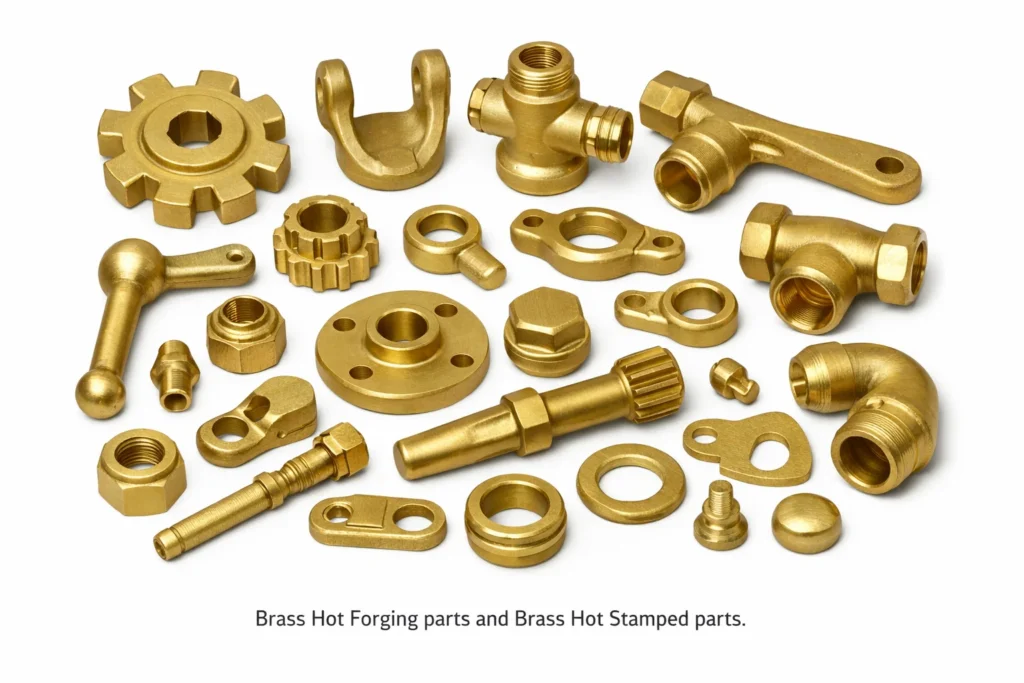
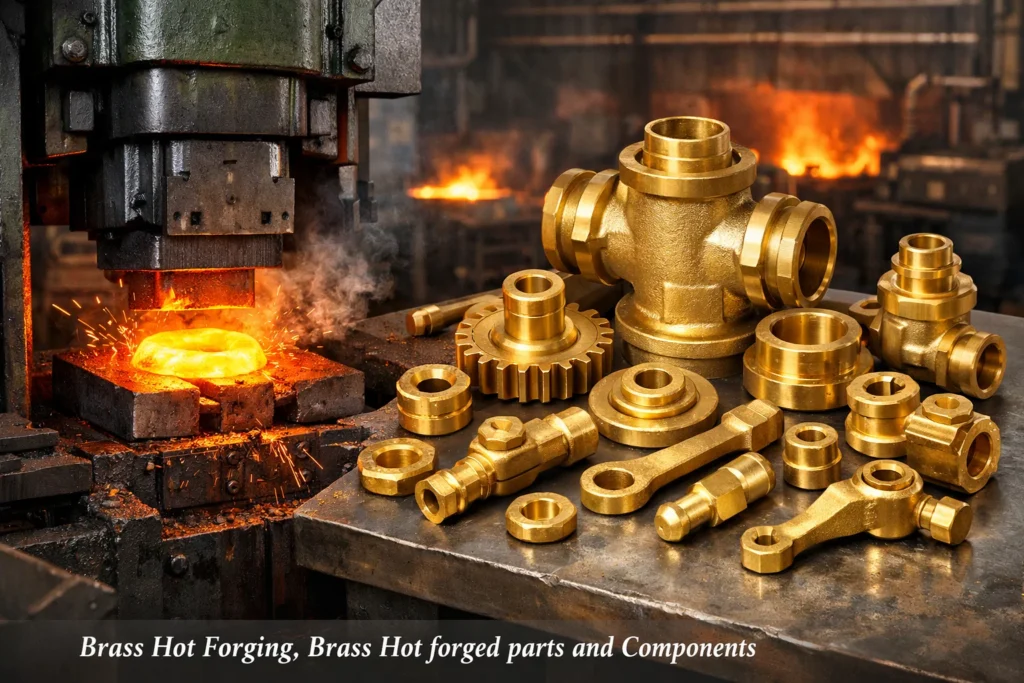
We are a leading supplier and exporter of Brass Hot Forging components from India, serving global industries for over 30 years. Our brass hot forged parts are manufactured using premium brass alloys, precision closed-die forging presses, and advanced quality control systems to deliver components with superior mechanical strength, excellent machinability, and outstanding corrosion resistance. Our brass hot forgings comply with ASTM, DIN, BS, IS, and JIS international standards, ensuring consistent performance for demanding industrial and electrical applications.
Equipped with state-of-the-art hot forging presses, CNC machining centers, spectroscopic testing labs, and CMM inspection equipment, we manufacture brass hot forged parts for the plumbing, electrical, automotive, gas distribution, valve, and defense sectors. Custom die development, flexible MOQ, and a typical lead time of 4–6 weeks make us the preferred brass hot forging partner for OEMs, distributors, and engineering companies worldwide.
Overview of Brass Hot Forging
What is Brass Hot Forging?
Brass Hot Forging is a manufacturing process in which brass billets (typically C36000, C37700, CW614N, or other free-machining brass alloys) are heated to 700°C–800°C and then formed under high compressive force in precision closed dies to produce near-net shape components. The hot forging process refines the grain structure of brass, eliminates internal voids and porosity, and produces components with enhanced tensile strength, improved machinability, and excellent dimensional accuracy. Hot forged brass parts are consistently superior to cast or machined-from-bar components in terms of mechanical integrity and long-term reliability.
Brass Closed-Die Hot Forging
Brass closed-die hot forging is the most widely used process for producing precision brass forged components. The heated brass billet is placed in a die cavity and forged under press loads ranging from 100 to 1,600 tonnes, producing components with tight tolerances (±0.1 mm to ±0.3 mm), excellent surface finish, and consistent microstructure. Brass closed-die forgings are ideal for valve bodies, tap bodies, plumbing fittings, electrical connectors, and automotive components.
Brass Impression-Die Forging
Brass impression-die forging uses matched dies with engraved cavities to produce complex-shaped brass components in high volumes. This process is used for intricate parts such as cable gland bodies, socket fittings, compression fittings, flange adapters, and connector housings. Impression-die brass forgings offer excellent repeatability and are suitable for high-volume production of precision components.
Brass Precision Forging
Brass precision hot forging (near-net shape forging) minimizes machining allowance and material waste, producing brass parts within tight tolerances directly from the die. This approach is used for components with complex cross-sections, internal passages, or thin walls, reducing production cost and cycle time while maintaining superior material properties.
Brass Hot Forged and Machined Parts
After hot forging, brass components often undergo CNC turning, milling, drilling, threading, and surface finishing to achieve final dimensional accuracy. Our integrated forging and machining facility enables us to deliver fully finished, ready-to-assemble brass hot forged and machined parts with tight tolerances and surface finishes as fine as Ra 0.8 µm.
Material Grades (International Standards)
| Region | Grade / Alloy | Standard | Composition |
|---|---|---|---|
| USA | C36000 (Free-Cutting Brass), C37700 (Forging Brass), C38500 | ASTM B124 / B283 | Cu 60–63%, Pb 2.5–3.7%, Zn bal. |
| Europe | CW614N (CuZn39Pb3), CW617N (CuZn40Pb2), CW608N (CuZn36Pb3) | EN 12164 / EN 12420 | Cu 57–59%, Pb 2.5–3.5%, Zn bal. |
| UK | CZ121, CZ122, CZ132 | BS 2874 / BS 2875 | Cu 57–60%, Pb 1.5–3.5%, Zn bal. |
| India | LT Brass (Low Tin), Naval Brass, Free Cutting Brass | IS 319 / IS 320 / IS 291 | Cu 58–62%, Pb 1.5–3.5%, Zn bal. |
| Germany | CuZn39Pb3 (Ms 58), CuZn40Pb2 | DIN EN 12420 / DIN 17660 | Cu 57–59%, Pb 2–3.5%, Zn bal. |
| Japan | C3602, C3603, C3604 | JIS H3250 / H3270 | Cu 59–63%, Pb 1.8–3.7%, Zn bal. |
Lead-free and low-lead brass alloys (C69300, C87850, CW511L, Eco Brass) available for drinking water and food-grade applications. Full material test reports and RoHS compliance certificates provided on request.
Key Features of Our Brass Hot Forgings
- Superior machinability — up to 100% relative machinability for free-cutting brass alloys
- Excellent corrosion resistance — suitable for water, gas, and marine environments
- High tensile strength: 380–490 MPa (depending on alloy and temper)
- Tight dimensional tolerances: ±0.1 mm to ±0.3 mm
- Surface finish: Ra 0.8 to Ra 3.2 µm (as machined)
- Available with nickel, chrome, tin, and zinc plating
- ASTM, DIN, BS, IS, JIS standard compliance
- RoHS-compliant and lead-free alloy options available
- Full material traceability with Mill Test Reports (MTR)
- Custom die development and tool design in-house
Product Range — Brass Hot Forged Components
- Brass hot forged valve bodies (ball valve, gate valve, globe valve, check valve)
- Brass forged tap and faucet bodies
- Brass hot forged plumbing fittings (elbows, tees, couplings, unions, adapters)
- Brass forged compression fittings and push-fit connectors
- Brass hot forged cable gland bodies and locknut
- Brass forged electrical connectors and terminal blocks
- Brass hot forged gas fittings and LPG valve bodies
- Brass forged automotive components — fuel injectors, brake fittings
- Brass hot forged flanges and pipe connectors
- Custom brass hot forged parts per drawing or sample
Technical Specifications
| Parameter | Specification |
|---|---|
| Forging Weight Range | 0.05 kg to 15 kg per piece |
| Maximum Forging Size | Up to 500 mm × 400 mm |
| Dimensional Tolerance | ±0.1 mm to ±0.3 mm (closed die) |
| Surface Roughness | Ra 0.8 – 3.2 µm (machined) |
| Forging Temperature | 700°C – 800°C |
| Tensile Strength | 380 – 490 MPa (alloy dependent) |
| Elongation | 15 – 30% |
| Hardness | 80 – 120 HRB (Rockwell B) |
| Certifications | ISO 9001:2015, ISO 14001:2015, ISO 45001:2018 |
Surface Finish & Plating Options
- Natural brass finish (bright polished or as-machined)
- Nickel plating (electroless or electrolytic)
- Chrome plating (decorative and hard chrome)
- Tin plating (ASTM B545 compliant)
- Zinc plating and yellow/blue passivation
- Silver plating for electrical contact applications
- Powder coating and epoxy coating
- Annealing and stress-relief heat treatment
Applications of Brass Hot Forgings
- Plumbing & Waterworks: Valve bodies, tap bodies, compression fittings, pipe connectors, manifold blocks, meter housings
- Gas & LPG Distribution: LPG valve bodies, gas regulator components, cylinder valves, gas cock bodies, pipe fittings
- Electrical & Switchgear: Cable gland bodies, terminal blocks, busbar connectors, socket contacts, crimping ferrules
- Automotive & Engineering: Fuel line fittings, brake system connectors, cooling system components, hydraulic fittings
- Marine & Offshore: Seacock valves, through-hull fittings, deck connectors, marine plumbing components
- HVAC & Refrigeration: Refrigerant valve bodies, pressure relief fittings, manifold connectors, service valves
- Fire Protection: Sprinkler heads, hose couplings, fire hydrant components, suppression system fittings
- Defence & Industrial: Hydraulic valve components, instrumentation fittings, precision machined parts
Industries Served
- Plumbing & Waterworks
- Gas Distribution & LPG
- Electrical & Switchgear
- Automotive & Engineering
- Marine & Offshore
- HVAC & Refrigeration
- Fire Protection Systems
- Defence & Heavy Industry
Packaging & Shipping
Brass hot forged components are packed in wooden crates, corrugated cartons, or foam-lined boxes depending on part size and fragility. Anti-tarnish wrapping and VCI packaging are used to protect brass surfaces during transit. We offer bulk palletized shipments and customer-specific labeling with part number, lot number, and barcode. Worldwide shipping via sea freight, air freight, and express courier with full export documentation including packing list, invoice, certificate of origin, and material test reports.
Why Choose Us for Brass Hot Forging?
- 30+ years of brass hot forging expertise
- In-house die design, CNC machining, and plating facilities
- Full quality control with spectrometer, CMM, and hardness testing
- ISO 9001:2015 certified with traceable material certifications
- RoHS-compliant and lead-free alloy options
- Competitive pricing with flexible MOQ
- 4–6 week standard lead time
- Global export to USA, UK, Europe, Australia, Middle East, and Asia
Request a Quote — Brass Hot Forging
Looking for precision Brass Hot Forging components? Submit your drawings, specifications, or samples to receive a competitive quotation within 24–48 hours. Our engineering team can assist with material selection, die design, and production planning. Contact us at sales@cableglandsindia.com or call +91 22 4344 9300 to discuss your brass hot forging requirements.
Frequently Asked Questions (Q&A) — Brass Hot Forging
Q1. What is brass hot forging and how is it different from brass casting?
Brass hot forging involves pressing heated brass billets in precision dies to produce components with refined grain structure, superior mechanical strength, and zero porosity. Brass casting pours molten metal into molds and typically results in lower strength, higher porosity, and variable microstructure. Hot forged brass parts are significantly stronger, more dimensionally consistent, and better suited for pressure-bearing applications.
Q2. What brass alloys are used in hot forging?
We forge in C36000, C37700, CW614N (CuZn39Pb3), CW617N, CZ121, CZ122, IS 319 brass, and various lead-free alloys including C69300 and CW511L. Alloy selection depends on application requirements — free-cutting alloys for high machinability, lead-free alloys for potable water and food contact applications.
Q3. What is the typical forging temperature for brass?
Brass is hot forged at temperatures between 700°C and 800°C depending on alloy composition. At this temperature, brass exhibits excellent plasticity and can be formed into complex shapes with minimal forging loads. Proper temperature control is critical to avoid grain growth or hot shortness.
Q4. What is the minimum order quantity (MOQ) for brass hot forgings?
We offer flexible MOQ. Prototype and sample orders can be as low as 50–100 pieces for existing die designs. New die development typically requires a minimum production commitment to amortize tooling cost. We work with both small-scale buyers and large OEMs.
Q5. Do you offer lead-free brass hot forgings for drinking water applications?
Yes. We supply lead-free and low-lead brass forgings in alloys such as C69300, CW511L (CuZn42), and Eco Brass compliant with NSF/ANSI 61, NSF 372, WRAS, and European drinking water regulations. These are suitable for plumbing fittings, valves, and meters in potable water systems.
Q6. What standards do your brass hot forgings comply with?
Our brass hot forgings comply with ASTM B124, B283, EN 12420, EN 12164, BS 2874, IS 319, IS 320, JIS H3250, and DIN EN 12420. We provide full material test reports, dimensional inspection certificates, and third-party test reports on request.
Q7. Can you produce brass hot forged valve bodies and tap bodies?
Yes. Valve bodies, tap bodies, ball valve bodies, gate valve components, and tap cartridge housings are among our most common brass hot forged products. We produce these in a wide range of sizes from 1/4″ to 4″ and supply to global plumbing and HVAC manufacturers.
Q8. What surface finishes are available on brass hot forged parts?
We offer nickel plating, chrome plating, tin plating, silver plating, zinc plating, natural polished brass finish, and various coating options. Custom finishes per customer specification or applicable standards (ASTM B545, EN 12540) are available.
Q9. What is the lead time for brass hot forgings?
Standard orders are typically delivered within 4–6 weeks from drawing approval and die completion. We maintain ready stock of commonly forged shapes and sizes in popular brass alloys, enabling faster delivery for repeat orders.
Q10. Do you export brass hot forged components globally?
Yes. We export to USA, UK, Germany, Italy, Australia, UAE, South Africa, Southeast Asia, and many other countries. We handle all export logistics, documentation, and certifications. Our experienced team ensures on-time delivery to global customers.
Q11. Can brass hot forgings be machined to close tolerances?
Yes. Brass hot forgings are known for their excellent machinability. Free-cutting brass alloys (CW614N, C36000) have up to 100% relative machinability, allowing high-speed CNC turning, milling, drilling, and threading to tolerances as tight as ±0.01 mm.
Q12. What quality tests are performed on brass hot forgings?
Quality testing includes chemical composition analysis (OES spectrometer), mechanical property testing (tensile strength, hardness, elongation), dimensional inspection (CMM, optical comparator), surface finish measurement, lead content testing (for low-lead/lead-free alloys), and pressure testing for valve and fitting components.