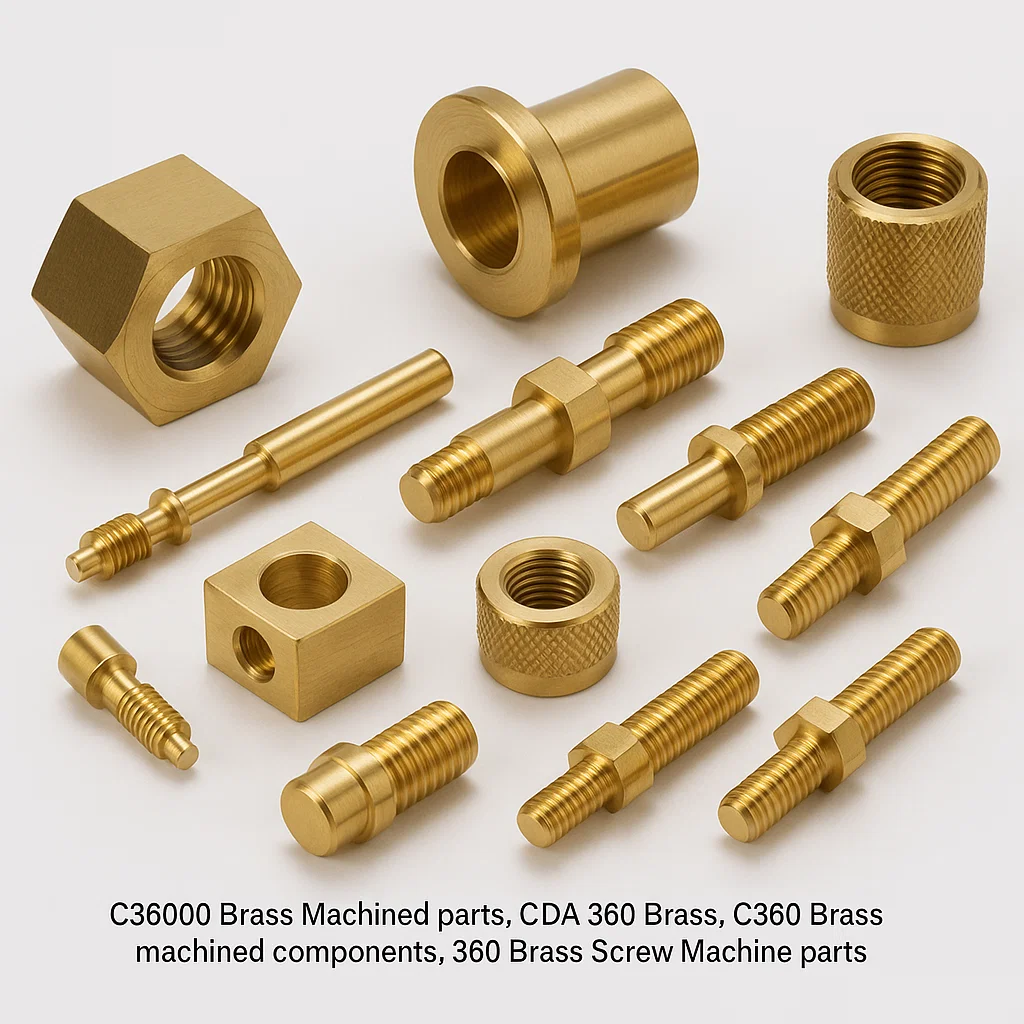
Brass 360 Machined Parts | C36000 Precision Turned Components & Free Cutting Brass Screw Machine Parts
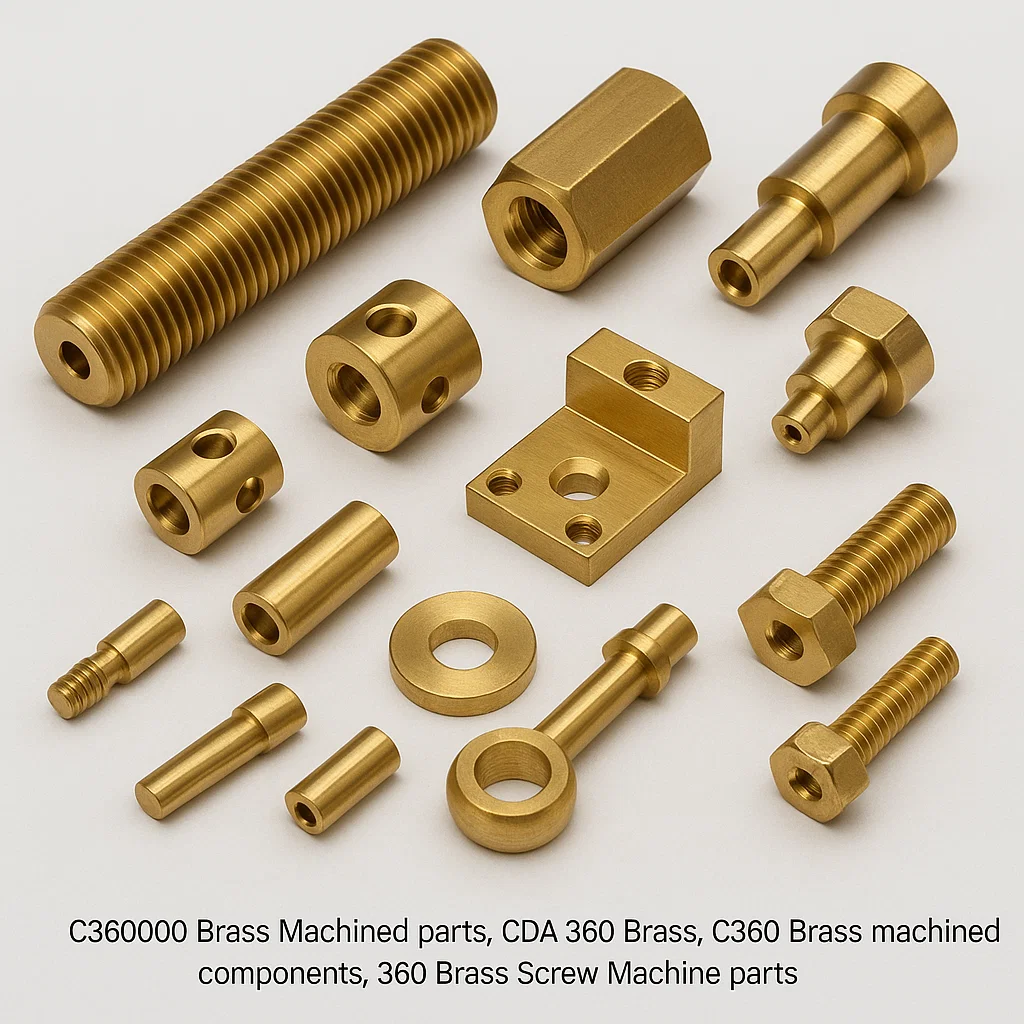
We are one of the leading manufacturers and exporters of Brass 360 machined parts, C36000 precision turned components, and free cutting Brass screw machine parts from India. We have been supplying high-quality Brass machined components to the world market for many decades. Our state-of-the-art manufacturing facility combines traditional craftsmanship with modern CNC technology to deliver exceptional precision Brass parts that meet the most demanding specifications across industries. With over three decades of experience in manufacturing Brass 360 grade components, we have established ourselves as a trusted partner for businesses requiring reliable, cost-effective precision machined parts with consistent quality. Our expertise spans across complex geometries, tight tolerances, and high-volume production runs for automotive, plumbing, electrical, instrumentation, and industrial applications. We specialize in custom Brass C360 machined parts, offering comprehensive solutions from prototype development to full-scale production with flexible lead times and competitive pricing structures that serve the North American, European, and Asia-Pacific markets.
Price: US$ 12.50/Kilogram
Comprehensive Overview of Brass 360 Machined Parts
Brass 360, also designated as C36000 or free cutting Brass, represents the most widely machined Copper alloy in modern manufacturing operations worldwide. This high-performance material combines approximately 61.5% Copper with 35.5% Zinc and contains approximately 3% lead, which significantly enhances its machinability characteristics, making it the preferred choice for high-speed screw machine operations and precision turning applications. The material’s exceptional free-cutting properties allow for superior chip formation and breaking during machining processes, resulting in reduced tool wear, faster production speeds, and excellent surface finishes without secondary operations.
Our manufacturing capabilities encompass the complete spectrum of Brass 360 machined components, including precision turned parts, CNC machined assemblies, screw machine products, cold headed fasteners, hot forged components, and complex multi-axis machined parts. The versatility of C36000 Brass makes it particularly suitable for components requiring intricate threading, knurling, precise dimensional control, and complex geometries that demand consistent mechanical properties throughout the production run. Industries worldwide depend on Brass 360 machined parts for applications where corrosion resistance, electrical conductivity, thermal properties, antimicrobial characteristics, and aesthetic appearance converge with the need for high-volume production and cost-effectiveness.
The global demand for Brass 360 precision machined components continues to grow across sectors including plumbing and pipe fittings, automotive fuel systems, electrical connectors and terminals, instrumentation components, hydraulic and pneumatic fittings, marine hardware, architectural trim, consumer electronics, medical devices, and telecommunications equipment. Our three-decade manufacturing heritage has positioned us to understand the nuanced requirements of different industries, allowing us to provide technical consultation during the design phase, suggest material optimizations, recommend cost-reduction strategies, and deliver components that exceed international quality standards including ASTM B16, ISO 9001:2015, RoHS compliance, and REACH regulations.
| Material Designation | Composition | Key Characteristics | Primary Applications |
|---|---|---|---|
| Brass 360 / C36000 | 61.5% Cu, 35.5% Zn, 3% Pb | Excellent machinability, good strength | Screw machine parts, fittings, valve components |
| UNS C36000 | Standard composition | Superior chip formation, reduced tool wear | High-volume turned parts, threaded components |
| Free Cutting Brass | Lead-enhanced for machinability | Fastest machining speeds, best surface finish | Complex geometries, precision instruments |
Brass 360 Manufacturing Process Flow
Raw Material
C36000 Brass Rod
Certified Stock
CNC Machining
Precision Turning
Multi-Axis Operations
Quality Control
Dimensional Inspection
±0.001″ Tolerance
Surface Treatment
Plating/Finishing
Per Specification
Final Packaging
Custom Labeling
Export Ready
International Material Grades and Standards for Brass 360
Understanding the various international designations for Brass 360 is essential when sourcing components globally or ensuring compliance with regional specifications. Different countries and standards organizations have established their own nomenclature systems for this widely-used free cutting Brass alloy, though the fundamental composition and properties remain consistent across designations. Our manufacturing facility maintains comprehensive material traceability and can provide mill test certificates conforming to any required international standard, ensuring seamless integration into your supply chain regardless of geographic location or regulatory requirements.
| Standard Organization | Material Designation | Specification Number | Regional Application |
|---|---|---|---|
| ASTM (USA) | C36000 | ASTM B16, B124, B283 | North America, primary standard |
| UNS (USA) | UNS C36000 | Unified Numbering System | United States industrial specification |
| SAE (USA) | SAE CA360 | SAE J461, J463 | Automotive and aerospace applications |
| CDA (USA) | CDA 360 | Copper Development Association | Industry reference standard |
| EN (Europe) | CW614N, CuZn39Pb3 | EN 12164, EN 12165 | European Union member states |
| DIN (Germany) | CuZn39Pb3, Ms58 | DIN 1709, DIN 17660 | Germany, Central Europe |
| BS (UK) | CZ121, CZ121 | BS 2874, BS 2875 | United Kingdom specifications |
| JIS (Japan) | C3604, C3604BD | JIS H3250, JIS H3300 | Japanese industrial standards |
| GB (China) | HPb59-1, C3604 | GB/T 4423 | Chinese national standard |
| IS (India) | IS 319 Type A | IS 319, IS 410 | Indian Standards Institution |
| ISO | CuZn39Pb3 | ISO 426, ISO 1635 | International harmonized standard |
Our quality assurance protocols include verification testing against multiple international standards simultaneously, providing customers with comprehensive material certification documentation that satisfies diverse regulatory requirements across different markets. This capability proves particularly valuable for multinational corporations operating in multiple jurisdictions and requiring consistent material properties across global production sites.
Brass C360 Machined Parts – Premium Free Cutting Performance
When manufacturing professionals discuss Brass C360 machined parts, they are referencing components produced from the industry’s gold standard for machinability among Copper alloys. The C360 designation specifically indicates conformance to UNS numbering standards, representing a precisely controlled alloy composition optimized for high-speed machining operations. Our facility processes hundreds of tons of C36000 Brass annually, transforming raw bar stock into finished precision components through advanced turning, milling, drilling, threading, and forming operations that leverage the material’s exceptional cutting characteristics.
The lead content in C36000 Brass acts as a natural chip breaker during machining, preventing long stringy chips that can interfere with automated production and damage surface finishes. This property enables our CNC turning centers to operate at significantly higher spindle speeds and feed rates compared to lead-free Brass alternatives, resulting in reduced cycle times, lower manufacturing costs, extended tool life, and superior surface finishes achieving Ra values of 32 microinches or better without secondary polishing operations. Typical C360 machined parts from our facility include hydraulic nipples, compression fittings, electrical terminals, valve stems, hose barbs, pipe nipples, instrument fittings, automotive fuel connectors, and countless custom-designed components serving specialized industrial applications.
Our engineering team works collaboratively with customers during the design phase of C360 Brass components, offering design for manufacturability recommendations that optimize part geometry for cost-effective production while maintaining functional requirements. This consultation process often identifies opportunities to reduce material waste, minimize secondary operations, consolidate assemblies, improve tolerances where critical, and relax tolerances where acceptable, ultimately delivering components that perform flawlessly while meeting budgetary constraints.
Brass 360 Grade Turned Parts – Precision Rotational Machining
Brass 360 grade turned parts represent components manufactured primarily through lathe operations where the workpiece rotates against stationary cutting tools to create cylindrical, conical, or complex rotational geometries. Our turning capabilities range from small Swiss-type screw machines handling workpieces as small as 0.5mm diameter up to large CNC lathes accommodating bar stock up to 150mm diameter, providing comprehensive coverage for virtually any turned component requirement. The turning process capitalizes on Brass 360’s exceptional machinability, allowing for rapid material removal rates, excellent threading characteristics, and the production of components with concentricity tolerances as tight as 0.0005 inches total indicator runout.
Common turned parts produced from Brass 360 grade material include threaded rod assemblies, precision bushings and spacers, flanged sleeves, shouldered pins, stepped shafts, knurled adjustment knobs, nozzles with internal passages, valve seats and bodies, electrical contact pins, terminal blocks, standoffs and supports, connector housings, and instrumentation components requiring precise dimensional control. The material’s consistent machining behavior across production runs ensures exceptional part-to-part repeatability, critical for high-volume applications where interchangeability is mandatory.
Our precision turned Brass components undergo rigorous in-process quality control with statistical process control monitoring critical dimensions throughout production runs. This proactive quality management approach identifies potential drift before parts fall outside specification limits, minimizing scrap rates and ensuring customers receive components that consistently meet drawing requirements. For applications requiring enhanced surface hardness, wear resistance, or electrical properties, we offer various post-machining surface treatments including nickel plating, tin plating, chromate conversion coating, and passivation processes.
C36000 Brass Screw Machine Parts – High-Volume Precision Manufacturing
The term C36000 Brass screw machine parts specifically refers to components produced on automatic screw machines, which are specialized machine tools designed for high-volume production of small to medium-sized parts from bar stock. These machines excel at producing components requiring multiple operations including turning, drilling, threading, knurling, and cut-off in a single setup without operator intervention between pieces. Brass C36000’s exceptional machinability makes it the preferred material for screw machine operations, as the alloy’s free-cutting properties dramatically reduce tool wear and allow sustained high-speed production over extended runs.
Our screw machine department operates multi-spindle automatic machines, single-spindle automatics, and Swiss-type screw machines capable of producing components at rates exceeding 10,000 pieces per day depending on complexity. Typical screw machine parts from C36000 Brass include hex standoffs, threaded inserts, electrical terminal pins, valve components, plumbing fittings, fasteners, small gears and pinions, bushings with multiple features, connector bodies, and numerous automotive and electronic components where high-volume production and dimensional consistency are paramount.
The economic advantages of screw machine production become particularly evident in runs exceeding 5,000 pieces, where the initial setup investment is amortized across large quantities, resulting in per-piece costs significantly lower than traditional turning operations. Our three decades of experience in Brass screw machine manufacturing has refined our setup procedures, tooling strategies, and process parameters to minimize setup time and maximize production efficiency, passing these cost savings directly to customers while maintaining the highest quality standards.
| Screw Machine Type | Optimal Part Diameter | Maximum Length | Production Rate | Best Applications |
|---|---|---|---|---|
| Swiss-Type CNC | 0.5mm – 38mm | Up to 300mm | 5,000-15,000 pcs/day | Long slender parts, complex features |
| Multi-Spindle Automatic | 6mm – 50mm | Up to 150mm | 10,000-25,000 pcs/day | High-volume simple to moderate complexity |
| Single-Spindle Automatic | 3mm – 65mm | Up to 200mm | 3,000-8,000 pcs/day | Moderate volume, complex operations |
| CNC Turning Center | 10mm – 150mm | Up to 500mm | 500-2,000 pcs/day | Low to moderate volume, complex geometry |
Brass Screw Machine Parts from 360 Grade – Application-Specific Solutions
When customers specifically request Brass screw machine parts from 360 grade material, they are emphasizing the importance of both the manufacturing process and the material specification. This combination delivers components that benefit from the economic advantages of automated screw machine production while ensuring the superior machinability, strength, and corrosion resistance characteristics inherent to C36000 alloy. Our production planning team evaluates each project to determine the optimal manufacturing approach, considering factors including part geometry, production volume, tolerance requirements, surface finish specifications, and delivery schedules to recommend the most cost-effective solution.
The versatility of 360 grade Brass in screw machine applications extends across industries from plumbing and HVAC where components must resist dezincification in water systems, to automotive fuel delivery systems requiring compatibility with modern ethanol-blend fuels, to electrical applications demanding consistent conductivity and reliable crimp connections, to marine hardware needing corrosion resistance in saltwater environments. Our material sourcing partnerships with certified mills ensure continuous availability of C36000 bar stock in various diameters, allowing us to maintain production schedules even during market shortages that affect other suppliers.
Quality assurance for screw machine production includes first-piece inspection, in-process sampling at predetermined intervals, and final audit inspection before packaging. Our metrology laboratory is equipped with coordinate measuring machines, optical comparators, thread gauges, pin gauges, surface roughness testers, and hardness testers to verify all critical dimensions and characteristics specified on customer drawings, providing comprehensive inspection reports upon request.
Brass Precision Turned Parts – Micron-Level Accuracy
Brass precision turned parts represent the pinnacle of rotational machining where dimensional accuracy, surface finish, and geometric tolerances must meet or exceed demanding specifications for critical applications. Our precision turning capabilities leverage state-of-the-art CNC lathes with live tooling, sub-spindles, and automated loading systems to produce components with tolerances as tight as ±0.0005 inches (±0.0127mm) on critical dimensions, surface finishes reaching 16 microinches Ra, concentricity within 0.0003 inches total indicator runout, and perpendicularity within 0.001 inches per inch of diameter.
The production of precision Brass turned components requires not only advanced machinery but also highly skilled machinists who understand material behavior, cutting tool geometry, coolant selection, chip control, and thermal management during the machining process. Brass 360’s consistent machining characteristics make it particularly well-suited for precision applications, as the material responds predictably to cutting forces and maintains dimensional stability throughout production runs, even as cutting tools wear within acceptable limits.
Applications demanding precision turned Brass parts include medical instruments where component dimensions directly affect device function and patient safety, aerospace fuel system components where leakage is unacceptable, hydraulic manifolds requiring perfect sealing interfaces, instrumentation components where measurement accuracy depends on component precision, and countless industrial applications where fit, form, and function tolerances leave no margin for error. Our three-decade track record of delivering high-precision Brass machined components to demanding customers worldwide demonstrates our commitment to excellence in every aspect of production from material procurement through final inspection and packaging.
Free Cutting Brass Components – Enhanced Machinability Solutions
The term free cutting Brass components specifically highlights the material’s enhanced machinability compared to other Brass alloys and Copper-based materials. The “free cutting” designation refers to the lead content in C36000 Brass, which acts as a built-in chip breaker, lubricant, and tool wear reducer during machining operations. This metallurgical advantage translates directly into lower manufacturing costs through increased production speeds, extended tool life, reduced power consumption, and superior surface finishes without secondary operations.
Our manufacturing facility capitalizes on these free cutting properties to offer competitive pricing on high-volume production runs while maintaining exceptional quality standards. The material’s machinability rating of 100% (the benchmark against which all other metals are compared) means cutting speeds can be maximized, feed rates optimized, and depth of cut increased compared to more difficult materials, resulting in cycle time reductions of 30-50% compared to lead-free alternatives when producing similar geometries.
Free cutting Brass machined parts serve virtually every industry segment including automotive fuel and brake systems, plumbing and sanitary fittings, electrical connectors and terminals, marine propulsion components, architectural hardware, consumer appliances, pneumatic and hydraulic systems, irrigation equipment, gas distribution systems, and industrial machinery. The material’s natural antimicrobial properties, attractive golden appearance, excellent corrosion resistance, good electrical and thermal conductivity, and ease of plating or finishing make it a versatile choice for both functional and decorative applications.
Environmental Consideration: While Brass 360 contains lead for enhanced machinability, we handle all machining waste responsibly through certified recycling programs. For applications with strict lead-free requirements such as potable water systems, we offer alternative low-lead and lead-free Brass alloys including C35300 (lead-free Brass), C46400 (Naval Brass), and Silicon Brass variants that comply with NSF/ANSI 61 and California AB 1953 (lead-free plumbing) regulations while maintaining good machinability characteristics.
Manufacturing Processes for Brass 360 Components
Our comprehensive manufacturing capabilities encompass multiple precision machining processes optimized for Brass 360 material properties. Each process offers distinct advantages depending on part geometry, production volume, tolerance requirements, and cost considerations. Our engineering team evaluates every project to recommend the most appropriate manufacturing approach or combination of processes to achieve optimal results.
CNC Turning and Precision Turning: Computer numerically controlled turning operations represent our primary production method for cylindrical and rotational geometries. Our CNC turning centers range from small Swiss-type machines handling miniature components to large horizontal lathes accommodating workpieces up to 150mm diameter and 500mm length. These machines feature live tooling for milling operations, sub-spindles for complete machining in single setups, part catchers for automated production, and probe systems for in-process verification. The precision turning process excels at producing threads with multiple pitches, complex contours with tight tolerance bands, deep hole drilling with straightness requirements, and surface finishes suitable for hydraulic sealing applications.
CNC Milling and Multi-Axis Machining: While Brass 360 is primarily associated with turning operations, our CNC milling capabilities handle complex non-rotational geometries including housings, brackets, manifolds, custom flanges, and components requiring slots, pockets, or irregular external profiles. Our vertical and horizontal machining centers with 3-axis, 4-axis, and 5-axis capabilities machine Brass 360 at high speeds while maintaining dimensional accuracy, producing components with flat surfaces, perpendicular features, and complex geometries not achievable through turning alone.
Screw Machine Production: Automatic screw machines remain unmatched for high-volume production of small to medium components requiring multiple sequential operations. Our multi-spindle automatics produce up to six identical parts simultaneously from hexagonal or round bar stock, while Swiss-type machines excel at long slender parts with complex features near the headstock. The screw machine process includes capabilities for cross drilling, thread rolling, knurling, form turning, internal and external threading, and numerous specialty operations completed automatically without operator intervention.
Thread Rolling and Thread Cutting: Brass 360 components frequently require various thread forms including UN/UNF unified threads, metric threads per ISO standards, NPT/NPTF tapered pipe threads, BSPT British standard pipe threads, and specialty thread forms per customer requirements. We offer both cut threads produced during turning operations and rolled threads created through cold-forming processes that work-harden the thread surface, improve fatigue strength, and create superior thread profiles particularly suited for high-stress applications.
| Manufacturing Process | Typical Tolerance | Surface Finish (Ra) | Production Rate | Optimal For |
|---|---|---|---|---|
| Swiss-Type Turning | ±0.0005″ (±0.013mm) | 16-32 microinches | Very High | Long slender parts, complex features |
| CNC Turning | ±0.001″ (±0.025mm) | 32-63 microinches | Medium to High | General turned components |
| Multi-Spindle Automatic | ±0.002″ (±0.05mm) | 63-125 microinches | Very High | High-volume production |
| CNC Milling | ±0.0005″ (±0.013mm) | 32-63 microinches | Low to Medium | Complex non-rotational geometry |
| 5-Axis Machining | ±0.0003″ (±0.008mm) | 16-32 microinches | Low | Complex contoured surfaces |
| Thread Rolling | ±0.001″ (±0.025mm) | 32-63 microinches | Very High | External threads, fasteners |
Machinery and Equipment Utilized for Brass 360 Production
Our manufacturing infrastructure represents a significant capital investment in precision machining technology specifically selected and configured for optimal Brass 360 component production. The machinery lineup includes CNC turning centers from leading manufacturers such as Citizen, Star, Tsugami, Okuma, Mazak, and Doosan, each selected for specific capabilities matching different production requirements. Our Swiss-type CNC machines handle miniature precision components with exceptional accuracy, while our larger horizontal turning centers process substantial workpieces requiring heavy material removal.
The multi-spindle automatic screw machines in our facility include both traditional cam-operated machines for proven high-volume designs and newer CNC-controlled multi-spindle machines offering quick changeover for smaller batch requirements. This equipment diversity allows us to match each project with the most economically appropriate production method, whether that means ultra-high-volume production on dedicated cam automatics or flexible small-batch runs on CNC equipment that can be reprogrammed quickly.
Supporting equipment includes precision grinding machines for creating custom cutting tools, thread rolling machines for cold-formed threads, deburring and vibratory finishing equipment for edge breaking and surface preparation, automated washing systems for chip and coolant removal, and comprehensive quality control instrumentation. Our preventive maintenance program ensures all production equipment operates within calibration specifications, minimizing downtime and maintaining the consistent accuracy our customers depend upon for their critical Brass 360 machined components.
Typical Brass 360 Parts Produced in Our Facility
The diversity of Brass 360 machined components produced in our facility reflects the material’s versatility across industries and applications. Our production portfolio encompasses thousands of unique part numbers serving customers worldwide, with new designs added continuously as industries evolve and technologies advance. Common component categories include plumbing and pipe fittings such as compression sleeves, ferrules, pipe nipples, hose barbs, adapter fittings, reducing bushings, and manifold bodies that connect fluid systems in residential, commercial, and industrial installations.
The automotive sector relies heavily on our Brass 360 precision parts for fuel system components including injector bodies, fuel line connectors, pressure regulators, carburetor jets, and pump fittings that must resist corrosion from modern ethanol-blend fuels while maintaining dimensional stability across temperature extremes. Electrical and electronic applications encompass terminal blocks, connector pins, switch components, ground terminals, bus bars, and conductive fasteners where Brass 360’s excellent electrical conductivity combines with good mechanical strength and corrosion resistance.
Industrial and instrumentation components form another major category, including gauge fittings, pneumatic quick-disconnects, hydraulic adapters, valve stems and seats, orifice plates, pressure taps, sample ports, and countless specialized fittings designed for specific process control applications. Marine and architectural hardware applications leverage Brass 360’s attractive appearance and moderate corrosion resistance for railings, decorative trim, door hardware, lamp components, and various consumer products where aesthetics matter alongside functionality.
| Component Category | Typical Parts | Size Range | Key Features |
|---|---|---|---|
| Plumbing Fittings | Compression sleeves, ferrules, nipples, barbs | 1/8″ to 2″ nominal | Thread sealing, pressure rating, corrosion resistance |
| Automotive Components | Fuel connectors, injector bodies, pump fittings | 3mm to 50mm diameter | Fuel compatibility, precision threads, leak-proof |
| Electrical Terminals | Contact pins, terminal blocks, bus bars | 0.5mm to 25mm | Conductivity, crimping capability, plating receptive |
| Hydraulic Fittings | Adapters, quick-disconnects, manifold ports | 1/4″ to 1.5″ nominal | High-pressure sealing, O-ring grooves, port threads |
| Instrumentation Parts | Gauge adapters, sample ports, sensor bodies | 6mm to 40mm | Precision dimensions, fine threads, clean passages |
| Fasteners & Hardware | Standoffs, spacers, threaded inserts, pins | M2 to M12 threads | Thread accuracy, surface finish, knurling |
Surface Finishes and Plating Options for Brass 360 Parts
The natural golden appearance of machined Brass 360 proves aesthetically pleasing for many applications, but various surface treatments and plating options enhance performance characteristics for specific environments or requirements. Our surface finishing capabilities include mechanical, chemical, and electroplating processes that modify surface properties while maintaining the dimensional accuracy achieved during machining operations. The selection of appropriate finish depends on factors including environmental exposure, wear resistance requirements, electrical conductivity needs, aesthetic preferences, and budget considerations.
Nickel plating represents one of the most popular finishes for Brass 360 components, providing excellent corrosion resistance, wear resistance, and a bright silvery appearance. We offer both electroless nickel plating that deposits uniformly regardless of part geometry and electrolytic nickel plating in bright, semi-bright, and matte finishes with thickness typically ranging from 5 to 25 microns depending on application requirements. Nickel-plated Brass parts serve automotive, plumbing, and industrial applications where enhanced durability is essential.
Tin plating provides excellent solderability and corrosion protection for electrical and electronic components, creating a silvery-white finish that maintains good electrical conductivity while protecting the underlying Brass from oxidation and tarnishing. Chromate conversion coatings offer lighter-duty corrosion protection with minimal dimensional impact, creating a thin chemical film in clear, yellow, or olive drab colors depending on chemistry used. For applications requiring the natural Brass appearance with oxidation protection, we apply clear lacquer or polyurethane coatings that preserve the golden color while preventing tarnishing during storage and service.
| Surface Finish | Typical Thickness | Appearance | Primary Benefits | Common Applications |
|---|---|---|---|---|
| As-Machined | N/A | Natural golden Brass | No additional cost, conductive | Internal components, temporary assemblies |
| Nickel Plating | 5-25 microns | Bright silver | Corrosion/wear resistance, hard surface | Automotive, marine, industrial fittings |
| Tin Plating | 3-15 microns | Silvery-white | Solderability, conductivity, corrosion protection | Electrical terminals, circuit board components |
| Chrome Plating | 10-50 microns | Mirror bright chrome | Maximum hardness, wear resistance, aesthetic | Decorative hardware, automotive trim |
| Chromate Coating | 0.5-2 microns | Clear, yellow, olive | Light corrosion protection, minimal cost | Non-critical applications, short-term protection |
| Clear Lacquer | 5-20 microns | Preserved golden Brass | Prevents tarnishing, maintains appearance | Decorative items, architectural hardware |
| Black Oxide | 1-3 microns | Dark black | Mild corrosion protection, reduced glare | Optical components, military applications |
Custom Plating Specifications: Our plating partnerships include certified facilities capable of meeting military specifications (MIL-DTL-1501), automotive requirements (ASTM B633), and RoHS-compliant processes for European markets. We coordinate all surface treatment operations and perform post-plating inspections to verify thickness, adhesion, appearance, and dimensional conformance before shipment.
Industries and Applications Utilizing Brass 360 Machined Parts
The widespread adoption of Brass 360 components across diverse industries reflects the material’s balanced combination of properties including machinability, strength, corrosion resistance, conductivity, and aesthetic appeal. Understanding the specific requirements of different sectors allows us to optimize manufacturing processes, recommend appropriate tolerances, suggest suitable surface finishes, and ensure components meet industry-specific standards and regulatory requirements that vary significantly across applications.
Plumbing and HVAC industries represent the largest consumers of Brass 360 machined parts globally, utilizing millions of compression fittings, pipe nipples, hose barbs, adapter fittings, valve components, and manifold bodies annually. These applications demand materials resistant to dezincification in potable water systems, dimensional accuracy ensuring leak-free installations, thread quality enabling proper sealing, and pressure ratings meeting code requirements. Our Brass 360 plumbing components comply with NSF/ANSI standards where applicable and can be manufactured from low-lead or lead-free alternatives for drinking water applications subject to California AB 1953 or similar regulations.
The automotive and transportation sectors incorporate Brass 360 parts throughout fuel delivery systems, brake systems, cooling systems, and electrical systems. Fuel line fittings must resist corrosion from ethanol-blend gasoline while maintaining dimensional stability across temperature ranges from Arctic cold to engine compartment heat. Electrical terminals and connectors require consistent conductivity, reliable crimping characteristics, and resistance to vibration-induced failure. Our automotive-grade Brass 360 components meet stringent quality requirements including PPAP documentation, ongoing capability studies, and compliance with automotive specifications such as SAE standards.
Electrical and electronics manufacturing depends on Brass 360’s excellent electrical conductivity combined with good mechanical strength for terminal blocks, connector pins, socket contacts, switch components, circuit breaker parts, and grounding hardware. These applications often require specific plating such as tin for solderability or nickel for wear resistance, while maintaining tight tolerances on contact surfaces that affect electrical performance. Marine and architectural applications leverage Brass 360 for hardware, railings, decorative trim, lighting components, and various consumer products where the attractive golden appearance, moderate corrosion resistance, and ease of finishing prove advantageous.
| Industry Sector | Typical Components | Critical Requirements | Volume Characteristics |
|---|---|---|---|
| Plumbing & HVAC | Compression fittings, valve parts, manifolds | Pressure rating, dezincification resistance, leak-free | Very high volume, seasonal demand |
| Automotive | Fuel connectors, brake fittings, sensor bodies | Temperature stability, vibration resistance, PPAP | High volume, JIT delivery requirements |
| Electrical | Terminals, contact pins, bus bars | Conductivity, plating adhesion, dimensional precision | Medium to high volume, automation compatible |
| Instrumentation | Gauge adapters, sample ports, sensor housings | Pressure rating, clean passages, thread accuracy | Low to medium volume, custom designs |
| Pneumatics/Hydraulics | Quick-disconnects, manifold ports, adapters | High-pressure sealing, O-ring grooves, port threading | Medium volume, multiple variations |
| Marine | Deck hardware, portlights, through-hulls | Saltwater resistance, aesthetic appearance, strength | Low to medium volume, seasonal |
| Medical Devices | Instrument components, fluid fittings | Biocompatibility, sterilization compatibility, precision | Low to medium volume, documentation intensive |
| Consumer Products | Lamp parts, hardware, decorative items | Aesthetic finish, cost-effectiveness, plating | Variable volume, trend-driven |
Tolerances and Quality Standards for Brass 360 Machined Components
Achieving and maintaining precise tolerances represents a fundamental requirement for quality Brass 360 machined parts that function properly in their intended applications. Our manufacturing capabilities encompass a wide tolerance range from general commercial tolerances suitable for non-critical dimensions to precision tolerances measured in tenths of thousandths of an inch for critical functional surfaces. Understanding the relationship between tolerance requirements and manufacturing costs allows our engineering team to work collaboratively with customers during the design phase, identifying which dimensions truly require tight tolerances and which can be relaxed to reduce manufacturing complexity and cost.
Our standard manufacturing tolerances for Brass 360 turned parts without specific callouts on drawings default to ±0.005 inches (±0.127mm) for dimensions up to 1 inch, with proportional increases for larger dimensions per internationally recognized standards such as ISO 2768 medium class. However, our precision machining capabilities extend significantly tighter when applications demand, achieving ±0.0005 inches (±0.013mm) on critical diameters, ±0.0003 inches (±0.008mm) total indicator runout on concentric features, ±0.001 inches perpendicularity per inch of diameter, and surface finishes as fine as 16 microinches Ra on turned surfaces.
Quality assurance protocols include first article inspection where the initial production piece undergoes comprehensive measurement of all dimensions, features, and characteristics with results documented and submitted for customer approval before proceeding with production runs. During production, we implement statistical process control monitoring critical dimensions at predetermined sampling intervals, adjusting processes proactively before drift causes out-of-tolerance conditions. Final audit inspection verifies conformance before packaging, with inspection reports available upon request documenting actual measurements versus drawing requirements.
| Tolerance Type | Standard Tolerance | Precision Tolerance | Ultra-Precision Tolerance |
|---|---|---|---|
| Diameters (turned) | ±0.005″ (±0.127mm) | ±0.001″ (±0.025mm) | ±0.0005″ (±0.013mm) |
| Lengths | ±0.010″ (±0.254mm) | ±0.002″ (±0.051mm) | ±0.001″ (±0.025mm) |
| Concentricity/Runout | ±0.005″ TIR | ±0.001″ TIR | ±0.0003″ TIR |
| Perpendicularity | ±0.005″ per inch | ±0.002″ per inch | ±0.001″ per inch |
| Surface Finish (Ra) | 125 microinches | 63 microinches | 16-32 microinches |
| Thread Tolerance | Class 2A/2B | Class 3A/3B | Custom per specification |
Our quality management system operates under ISO 9001:2015 certification, ensuring documented procedures govern every aspect of production from material procurement through final inspection and shipment. Traceability systems link every production lot to specific material heat lots, machine operations, inspection records, and shipping documentation, enabling rapid investigation should quality questions arise. For customers requiring additional documentation such as material test reports, dimensional inspection reports, certificates of conformance, or PPAP documentation for automotive applications, we maintain systems to generate and archive these documents throughout the product lifecycle.
Standard Turnaround Time and Lead Time Expectations
Understanding realistic production lead times proves essential for effective supply chain planning and project management. Our standard turnaround time for Brass 360 machined parts ranges from four to six weeks from purchase order receipt to shipment, encompassing material procurement, production scheduling, manufacturing operations, quality inspection, surface treatment if specified, and final packaging. This timeframe assumes standard C36000 material availability, conventional machining operations, and reasonable production quantities that allow efficient scheduling within our existing production flow.
Several factors influence actual lead times for specific projects including material availability where standard bar stock diameters ship immediately from our inventory while special sizes may require mill lead times of two to three weeks, production complexity where simple turned parts complete faster than components requiring multiple setups or secondary operations, quantity ordered where larger volumes may require extended machine time but benefit from economies of scale, and surface treatment requirements where plating operations add one to two weeks depending on finish type and plater capacity.
For customers with urgent timeline requirements, we offer expedited production services with lead times as short as two to three weeks for suitable projects, though expedite charges may apply to offset the scheduling disruption and potential overtime costs. Our three decades of manufacturing experience has refined our production planning systems to provide reliable delivery performance, with on-time delivery rates consistently exceeding 95% even during periods of high demand. We maintain transparent communication throughout production, providing status updates at key milestones and proactively alerting customers to any potential delays with recommended mitigation strategies.
Flexible Production Scheduling: Unlike some manufacturers with rigid minimum order quantities and inflexible schedules, we pride ourselves on accommodating customer needs whether that means splitting shipments for JIT delivery programs, adjusting production sequences to align with your project timelines, or scheduling prototype runs ahead of production commitments. This flexibility stems from our diverse machinery lineup and experienced production planning team capable of optimizing schedules across multiple concurrent projects.
Material Properties and Technical Specifications of Brass 360
A comprehensive understanding of Brass 360 material properties enables engineers to design components that fully leverage the alloy’s strengths while accounting for its limitations. The mechanical, physical, electrical, and thermal characteristics of C36000 Brass make it suitable for diverse applications, though specific property values vary depending on temper condition, section thickness, processing history, and testing methodology. The data presented here represents typical values for reference purposes, with actual properties potentially varying within specification limits.
| Mechanical Properties of Brass 360 (C36000) | |
|---|---|
| Property | Typical Value |
| Tensile Strength | 55,000 – 65,000 psi (380 – 450 MPa) |
| Yield Strength (0.2% offset) | 20,000 – 30,000 psi (138 – 207 MPa) |
| Elongation in 2 inches | 18 – 30% |
| Hardness (Rockwell B) | 60 – 75 HRB |
| Hardness (Brinell) | 75 – 95 HB |
| Modulus of Elasticity | 14,000,000 psi (97 GPa) |
| Shear Strength | 35,000 – 40,000 psi (241 – 276 MPa) |
| Fatigue Strength (10^8 cycles) | 20,000 psi (138 MPa) |
| Physical and Thermal Properties | |
|---|---|
| Property | Typical Value |
| Density | 0.307 lb/in³ (8.5 g/cm³) |
| Melting Point (Liquidus) | 1,650°F (900°C) |
| Melting Point (Solidus) | 1,580°F (860°C) |
| Thermal Conductivity | 70 BTU-ft/hr-ft²-°F (115 W/m-K) |
| Coefficient of Thermal Expansion | 11.6 x 10^-6 per °F (20.9 x 10^-6 per °C) |
| Specific Heat Capacity | 0.09 BTU/lb-°F (377 J/kg-K) |
| Electrical Conductivity | 26% IACS (International Annealed Copper Standard) |
| Electrical Resistivity | 66.4 microhm-cm at 20°C |
The machinability rating of Brass 360 stands at 100%, serving as the benchmark reference point against which all other metals are compared for machining ease. This exceptional machinability results from the lead content acting as an internal lubricant and chip breaker, combined with the alloy’s moderate hardness and uniform microstructure. Corrosion resistance proves adequate for most indoor environments and many outdoor applications, though Brass 360 can experience dezincification in certain water chemistries and is not recommended for continuous immersion in hot or acidic waters without protective plating.
Dimensional Chart for Common Brass 360 Machined Parts
The following dimensional reference charts provide typical size ranges and specifications for frequently manufactured Brass 360 components from our facility. These represent common configurations rather than comprehensive listings, as custom dimensions are manufactured routinely to meet specific application requirements. All dimensions shown use decimal inch measurements with metric equivalents provided where applicable.
| Brass 360 Compression Fittings – Typical Dimensions | |||||
|---|---|---|---|---|---|
| Nominal Size | Outside Diameter | Thread Size | Overall Length | Ferrule Depth | Hex Size |
| 1/8″ | 0.375″ (9.5mm) | 10-32 UNF | 0.875″ (22.2mm) | 0.312″ (7.9mm) | 7/16″ |
| 1/4″ | 0.500″ (12.7mm) | 7/16-20 UNF | 1.125″ (28.6mm) | 0.437″ (11.1mm) | 9/16″ |
| 3/8″ | 0.625″ (15.9mm) | 9/16-18 UNF | 1.375″ (34.9mm) | 0.562″ (14.3mm) | 11/16″ |
| 1/2″ | 0.812″ (20.6mm) | 3/4-16 UNF | 1.625″ (41.3mm) | 0.687″ (17.5mm) | 7/8″ |
| 3/4″ | 1.062″ (27.0mm) | 1-1/16-12 UN | 2.000″ (50.8mm) | 0.875″ (22.2mm) | 1-1/4″ |
| 1″ | 1.312″ (33.3mm) | 1-5/16-12 UN | 2.375″ (60.3mm) | 1.062″ (27.0mm) | 1-1/2″ |
| Brass 360 Electrical Terminals – Typical Dimensions | |||||
|---|---|---|---|---|---|
| Wire Gauge | Pin Diameter | Pin Length | Crimp Barrel ID | Crimp Length | Overall Length |
| 22-18 AWG | 0.040″ (1.0mm) | 0.312″ (7.9mm) | 0.055″ (1.4mm) | 0.250″ (6.4mm) | 0.625″ (15.9mm) |
| 16-14 AWG | 0.062″ (1.6mm) | 0.375″ (9.5mm) | 0.075″ (1.9mm) | 0.312″ (7.9mm) | 0.750″ (19.1mm) |
| 12-10 AWG | 0.093″ (2.4mm) | 0.437″ (11.1mm) | 0.110″ (2.8mm) | 0.375″ (9.5mm) | 0.875″ (22.2mm) |
| 8-6 AWG | 0.125″ (3.2mm) | 0.500″ (12.7mm) | 0.150″ (3.8mm) | 0.437″ (11.1mm) | 1.000″ (25.4mm) |
Why Choose Our Brass 360 Machined Parts Over Competitors
Selecting the right manufacturing partner for your Brass 360 precision components significantly impacts product quality, delivery reliability, total cost of ownership, and long-term supply chain stability. Our three decades of continuous operation serving customers worldwide has refined every aspect of our business from technical capabilities through customer service, creating compelling advantages that differentiate us from competitors in this highly competitive global marketplace.
Faster Turnaround Times with Flexible Scheduling: Unlike many manufacturers locked into rigid production schedules with lengthy lead times, our diverse machinery lineup and experienced production planning team enables us to accommodate urgent requirements with expedited turnaround options as short as two to three weeks when needed. We understand that market dynamics change rapidly and customer timelines don’t always align perfectly with standard manufacturing schedules, so we’ve built flexibility into our operations allowing us to adjust priorities, split shipments, and coordinate deliveries matching your project requirements rather than forcing you to adapt to our convenience.
Superior Customer Communication and Technical Support: Many customers report frustration with overseas manufacturers who communicate sporadically, struggle with technical terminology, and fail to proactively address issues. Our dedicated customer service team includes English-speaking technical specialists who understand both machining technology and customer needs, providing responsive communication via email, phone, WhatsApp, and video conferencing. We don’t disappear after taking your order; instead, we maintain regular contact throughout production, provide status updates at key milestones, share inspection photos when requested, and proactively alert you to any potential concerns with recommended solutions rather than waiting for problems to escalate.
Engineering Expertise and Design Optimization: Our engineering team brings collective decades of Brass machining experience to every project, offering valuable design-for-manufacturability consultation that competitors often overlook. We review customer drawings identifying opportunities to reduce manufacturing complexity without compromising functionality, suggest tolerance adjustments that improve cost-effectiveness while maintaining performance, recommend material or finish alternatives when appropriate, and collaborate on prototype development ensuring designs transition smoothly to production. This technical partnership approach often saves customers significant time and money compared to manufacturers who simply build exactly what’s specified without questioning whether optimizations might benefit the project.
Global Experience Serving Demanding Markets: Three decades of exporting Brass 360 components to North America, Europe, Australia, and Asia-Pacific has exposed us to the most stringent quality requirements, regulatory standards, documentation needs, and customer expectations worldwide. This global experience means we understand PPAP documentation for automotive customers, mill test certificate requirements for regulated industries, packaging and labeling standards for different markets, and the quality consistency multinational corporations demand across their global facilities. We’re not learning these requirements on your project; we’ve already mastered them serving hundreds of customers across dozens of industries over many years.
Customized Packaging with Customer Branding: We recognize that packaging represents the final manufacturing step before components enter your facility, so we offer customized packaging solutions including component-specific trays preventing damage during shipment, custom labeling with your part numbers and barcodes, bulk packaging configurations optimized for your receiving processes, and the ability to include your company logos or branding on packaging materials. This attention to packaging details streamlines your receiving operations while protecting component quality throughout the supply chain journey.
Consistent Quality Through Statistical Process Control: Rather than relying solely on final inspection to catch problems after they occur, we employ statistical process control throughout production monitoring critical dimensions continuously and adjusting processes proactively before drift causes out-of-specification conditions. This disciplined quality approach combined with ISO 9001:2015 certified quality management systems ensures consistent part quality batch after batch, year after year, eliminating the quality surprises that plague relationships with less sophisticated manufacturers.
30+ Years Manufacturing ExperienceEstablished 1990s, serving global customers across all major industries with proven track record
ISO 9001:2015 Certified QualityDocumented quality management systems, traceability, continuous improvement processes
Flexible Minimum Order QuantitiesAccommodate prototype runs through high-volume production without punitive minimum requirements
Complete Surface Treatment SolutionsIn-house coordination of plating, finishing, coating, with quality verification before shipment
Comprehensive DocumentationMill certs, inspection reports, CoCs, PPAP, RoHS compliance, REACH documentation as required
Responsive Technical SupportEnglish-speaking engineers, rapid quote response, design consultation, problem-solving collaboration
Packaging and Shipping for Brass 360 Components
Proper packaging protects your Brass 360 machined parts throughout the supply chain journey from our facility to your receiving dock, preventing damage, corrosion, and handling issues that could compromise component quality or create receiving complications. Our packaging approach considers part geometry, size, weight, quantity, shipping method, and destination requirements to select appropriate protection strategies ensuring components arrive in perfect condition ready for immediate use in your operations.
Standard packaging configurations include bulk packaging in polyethylene bags with desiccant for general-purpose components not requiring individual protection, compartmentalized tray packaging for delicate parts needing separation during shipment, tube packaging for threaded components protecting thread quality, blister packaging for small quantities maintaining part orientation, and custom foam inserts for irregularly shaped components requiring specific positioning. External packaging utilizes corrugated cartons sized appropriately for contents, reinforced for international shipping, labeled with handling instructions, and coordinated with your receiving requirements including special markings, orientation indicators, or fragile designations when appropriate.
For customers requiring specialized packaging solutions, we accommodate requests including custom labeling with your part numbers and barcodes, sequential numbering for traceability, inclusion of inspection documentation inside packages, kanban cards or traveler tags, packaging in customer-supplied containers, and coordination with your vendor-managed inventory programs. Our export packaging expertise ensures compliance with international shipping regulations including ISPM-15 heat-treated wood packaging when required, proper hazardous material documentation if finishes require, and customs documentation facilitating smooth clearance through import procedures.
Shipping methods include air freight for urgent requirements reaching major cities worldwide within one week, ocean freight for cost-effective high-volume shipments with transit times of four to six weeks to North American and European ports, and courier services via DHL, FedEx, or UPS for small urgent shipments requiring door-to-door service with tracking. We maintain relationships with freight forwarders specialized in manufacturing supply chains, enabling competitive shipping rates and reliable service even to challenging destinations. All shipments include commercial invoices, packing lists, certificates of origin when required, and any additional documentation your customs broker needs for smooth import clearance.
Customer Testimonials – Real Experiences with Our Brass 360 Parts
“We’ve been sourcing Brass 360 compression fittings from this manufacturer for over eight years now, and they’ve consistently delivered exactly what we need when we need it. The quality is exceptional with virtually zero rejects, their communication is outstanding with engineers who actually understand our technical requirements, and their willingness to work with our changing schedules has made them an invaluable supply chain partner. When we had a design challenge on a new product line, their engineering team suggested modifications that reduced our manufacturing costs by nearly 30% while improving assembly reliability. That kind of proactive technical support is rare and extremely valuable. We’ve recommended them to colleagues in our industry without hesitation.”
“After experiencing quality inconsistencies and communication frustrations with our previous Brass machining supplier, we switched to this manufacturer three years ago and haven’t looked back. The difference in professionalism, technical capability, and customer service is remarkable. They respond to inquiries promptly with detailed technical answers, they meet delivery commitments reliably, and the dimensional consistency of their Brass 360 turned parts has eliminated the sorting and rework we previously accepted as normal. Their ISO certification isn’t just paperwork—you can see the quality systems in action throughout their operation. The pricing is competitive, especially when you factor in the total cost including reduced scrap rates and eliminated expedite charges we used to pay constantly. They’ve earned our trust and our repeat business.”
Comprehensive Technical Q&A About Brass 360 Machined Parts
Q1: What makes Brass 360 the preferred material for screw machine parts compared to other Brass alloys?
Brass 360 contains approximately 3% lead which acts as an internal chip breaker and lubricant during machining, providing superior machinability rated at 100% (the benchmark standard). This enables faster production speeds, longer tool life, better surface finishes, and reduced manufacturing costs compared to lead-free alternatives, making it ideal for high-volume screw machine production.
Q2: Can Brass 360 machined parts be used in potable water applications?
Standard Brass 360 contains lead exceeding limits established by Safe Drinking Water Act amendments and California AB 1953, so it’s not compliant for wetted surfaces in drinking water systems. For potable water applications, we recommend low-lead Brass C35300 or lead-free Silicon Brass alternatives that maintain reasonable machinability while meeting regulatory requirements.
Q3: What tolerance levels can be consistently achieved on Brass 360 turned parts?
Our CNC turning operations routinely achieve ±0.001 inches on general dimensions, ±0.0005 inches on critical diameters with precision machining, concentricity within 0.001 inches TIR, and surface finishes of 32 microinches Ra or better. Tighter tolerances to ±0.0003 inches are possible on specific features when applications demand ultimate precision.
Q4: How does Brass 360 perform in marine environments with saltwater exposure?
Brass 360 provides moderate corrosion resistance in marine environments, suitable for above-waterline applications and intermittent saltwater exposure. For continuous immersion applications, we recommend upgrading to Naval Brass C46400 which contains tin for enhanced seawater corrosion resistance, or applying protective plating such as nickel or chrome to standard Brass 360 components.
Q5: What is the minimum order quantity for custom Brass 360 machined parts?
We maintain flexible minimum order policies accommodating prototype runs as small as 25-50 pieces through high-volume production exceeding 100,000 pieces annually. Minimum quantities vary based on part complexity and setup requirements, but we strive to support customers at every stage from product development through full production.
Q6: How long does nickel plating add to the turnaround time for Brass 360 parts?
Nickel plating typically adds one to two weeks to standard lead times depending on plating shop capacity and finish requirements. We coordinate all plating operations with certified suppliers, performing post-plate inspection before shipment to verify thickness, adhesion, appearance, and dimensional conformance to specifications.
Q7: What documentation can you provide for Brass 360 material certification?
We provide comprehensive material documentation including mill test certificates confirming chemical composition and mechanical properties, certificates of conformance, RoHS compliance declarations, REACH statements, dimensional inspection reports, and PPAP documentation for automotive customers. All documents are maintained in our quality management system for traceability throughout the product lifecycle.
Q8: Can you produce Brass 360 parts with both imperial and metric dimensions?
Absolutely. Our CNC equipment programs in both inch and metric units, and our inspection equipment calibrates to both systems. We routinely manufacture components to DIN metric standards, JIS Japanese specifications, and ANSI/ASME inch-based drawings, ensuring dimensional accuracy regardless of which measurement system your drawings specify.
Q9: What threading capabilities do you offer on Brass 360 turned components?
We produce all common thread forms including UN/UNF unified threads, metric ISO threads, NPT/NPTF tapered pipe threads, BSPT/BSPP British threads, and custom thread profiles. Threading methods include single-point cut threads for precision applications and thread rolling for high-strength fasteners. Thread tolerances range from Class 2A/2B commercial to Class 3A/3B precision depending on requirements.
Q10: How do you handle design changes during production runs?
We maintain flexible engineering change management procedures accommodating design modifications when necessary. Minor changes not affecting tooling can often be implemented immediately, while significant changes require evaluation for impact on schedule and cost. We communicate all implications transparently and work collaboratively to implement changes with minimal disruption to delivery commitments.
Q11: What surface finish options beyond plating are available for Brass 360 parts?
Beyond electroplating, we offer passivation for corrosion resistance, tumbling and vibratory finishing for deburring and smoothing, bead blasting for matte appearance, polishing for mirror finishes, clear lacquer coating to prevent tarnishing while maintaining Brass appearance, and various chemical treatments including chromate conversion coatings in multiple colors.
Q12: Can your Brass 360 components meet automotive industry quality requirements?
Yes, we support automotive customers with PPAP documentation, capability studies demonstrating process control, measurement system analysis, FMEA participation, control plan development, and ongoing quality monitoring meeting IATF 16949 principles. Our statistical process control systems ensure consistent quality across production runs meeting demanding automotive zero-defect expectations.
Q13: What is the typical scrap rate for Brass 360 machining in your facility?
Our scrap rates consistently remain below 1% for established production parts due to statistical process control, proven tooling strategies, and experienced machinists. First-run prototype batches may experience slightly higher scrap during process development, but we absorb these development costs rather than passing them to customers, charging only for conforming parts delivered.
Q14: How do you ensure dimensional consistency across large production quantities?
We employ statistical process control monitoring critical dimensions throughout production runs, sampling at predetermined intervals and plotting measurements on control charts. When measurements approach control limits, we adjust processes proactively before parts fall outside specifications. This disciplined approach combined with calibrated equipment and skilled operators ensures part-to-part consistency even on runs exceeding 50,000 pieces.
Q15: Can you manufacture Brass 360 parts requiring secondary operations like assembly or testing?
Yes, we coordinate secondary operations including mechanical assembly, press-fitting inserts, adhesive bonding, leak testing, functional testing, and various value-added services streamlining your supply chain. By delivering tested sub-assemblies rather than loose components, we reduce your handling costs while ensuring all components function properly before leaving our facility.
Q16: What cost advantages does Brass 360 offer compared to Stainless Steel for similar applications?
Brass 360 typically costs 30-50% less than Stainless Steel on a per-pound basis, machines 3-5 times faster reducing labor costs dramatically, and requires less expensive tooling with longer tool life. For applications not requiring Stainless Steel’s superior corrosion resistance or strength, Brass 360 delivers excellent performance at significantly lower total manufacturing cost.
Q17: How do environmental conditions during shipping affect Brass 360 parts?
Brass 360 can tarnish when exposed to humidity and atmospheric contaminants during extended shipping, though this surface oxidation doesn’t compromise dimensional accuracy or functionality. We package parts with desiccant in sealed bags for long-distance ocean freight, apply temporary protective coatings when appropriate, and recommend plated finishes for parts requiring pristine appearance throughout the supply chain.
Q18: What engineering support do you provide during the design phase of new components?
Our engineering team reviews customer drawings providing design-for-manufacturability recommendations, tolerance optimization suggestions, material selection guidance, finish recommendations, cost reduction opportunities, and manufacturability assessments. This consultation often occurs before quotes are finalized, ensuring designs transition smoothly to production without costly revisions later. We view this technical partnership as essential to customer success and our long-term relationships.
Glossary of Terms Related to Brass 360 Machined Parts
Related Search Terms for Brass 360 Machined Components
Customers searching for Brass 360 machined parts frequently use related terminology when researching suppliers and technical specifications. Understanding these related search terms helps identify comprehensive information resources and alternative supplier options. Common related searches include:
Material and Alloy Variations: C36000 Brass components, UNS C36000 parts, free cutting Brass machining, CDA 360 Brass, leaded Brass components, free machining Brass alloy, CuZn39Pb3 parts, CW614N components, Brass 360 rod stock, C36000 bar material
Manufacturing Process Terms: CNC Brass turning services, Swiss machined Brass parts, precision Brass turning, automatic screw machine products, multi-spindle Brass machining, custom Brass turning, CNC Brass components, precision turned Brass fittings, Swiss-type Brass parts
Application-Specific Searches: Brass plumbing fittings manufacturer, automotive Brass components, electrical Brass terminals, hydraulic Brass fittings, pneumatic Brass connectors, instrumentation Brass parts, marine Brass hardware, Brass valve components
Quality and Specification Terms: ISO certified Brass machining, ASTM B16 Brass parts, RoHS compliant Brass components, precision tolerance Brass turning, tight tolerance Brass machining, high-quality Brass parts manufacturer
Geographic and Sourcing Terms: Brass machining India, Indian Brass component manufacturer, Brass parts exporter India, overseas Brass machining supplier, Asian Brass manufacturing, global Brass component sourcing
Volume and Service Terms: High-volume Brass production, low-volume Brass machining, prototype Brass parts, custom Brass manufacturing, OEM Brass components, contract Brass machining services
Request Your Custom Quote Today
Let’s Discuss Your Brass 360 Component Requirements
With three decades of experience manufacturing precision Brass 360 machined parts for customers worldwide, we’re ready to become your trusted manufacturing partner. Whether you need high-volume screw machine production, precision CNC turned components, or custom-designed Brass parts with tight tolerances, our team has the expertise, equipment, and commitment to quality that delivers results.
Contact us today to discuss your project requirements:
📧 Email us your drawings and specifications for a detailed quotation within 24-48 hours including material recommendations, manufacturing approach, timeline, and competitive pricing.
📱 Call or WhatsApp our technical sales team for immediate assistance with urgent requirements, technical questions, or to discuss complex projects requiring engineering consultation.
📄 Request our capabilities brochure with detailed information about machinery, processes, quality systems, and case studies demonstrating our experience across industries and applications.
🔍 Schedule a virtual facility tour via video conference to see our manufacturing operations, meet our technical team, and understand our quality systems and production capabilities firsthand.
We look forward to demonstrating why hundreds of customers worldwide trust us for their critical Brass 360 machined components year after year. Let’s build a successful partnership together.
USA Sales: We are a trusted global supplier of precision metal parts for the electrical industry, proudly partnering with leading USA companies to power innovation and infrastructure. From Fortune 500 manufacturers to innovative tech giants, our high-quality components meet rigorous U.S. standards for performance, durability, and safety. By combining advanced manufacturing with reliable delivery and dedicated stateside support, we help American businesses streamline supply chains, reduce costs, and drive the future of electrical systems, renewable energy, and smart grid technology. Choose a supplier engineered for the demands of the U.S. market. We can also offer DDP pricing within USA to every possible state.