PRICE: US$ 8/kilogram, CIF USA port
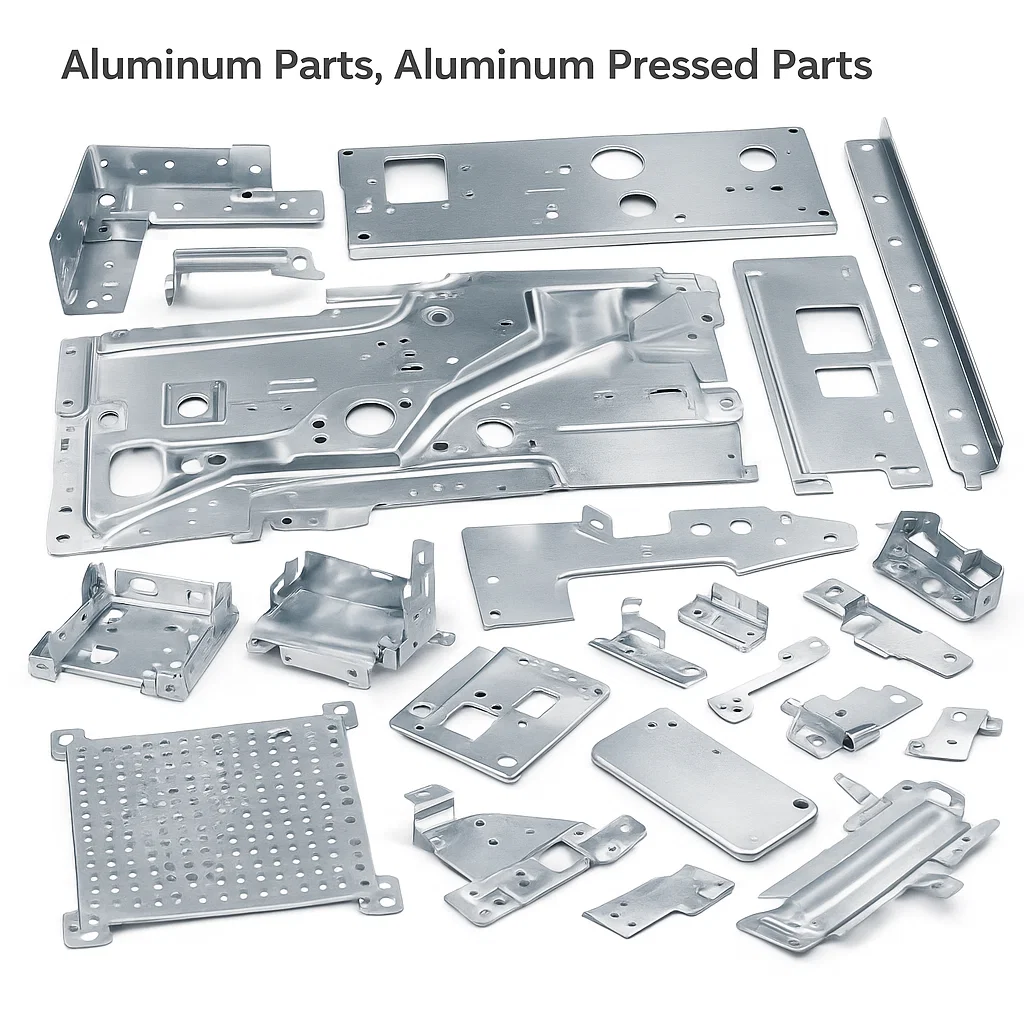
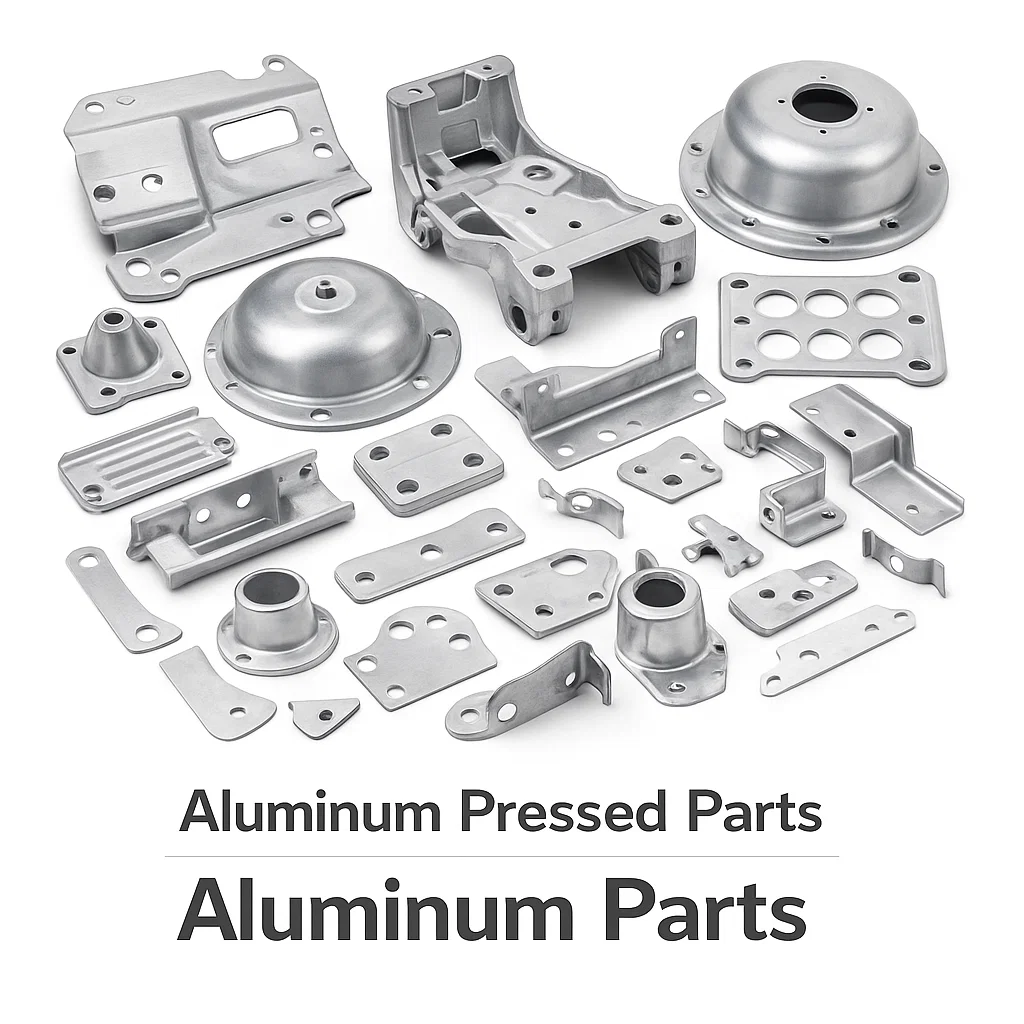
We are one of the leading manufacturers and exporters of high-precision Aluminum Pressed Parts and Aluminum Components from India. We have been supplying durable and lightweight aluminum fabricated parts to the world market for many decades, building a reputation for engineering excellence and reliable global supply. Our specialization encompasses a comprehensive range from basic Aluminum Sheet Metal Pressing to complex Aluminum Progressive Die Pressing for high-volume applications. This includes critical assembly items like Aluminum Pressed Pipe Clamps and Aluminum Pipe Clips, designed for secure fastening in demanding environments. Our technical prowess allows us to transform various Aluminum material grades into intricate, dimensionally stable pressed components that meet rigorous international standards for industries including automotive, aerospace, electronics, and HVAC. Every component benefits from our deep-seated expertise in metal forming, ensuring optimal performance, corrosion resistance, and weight savings.
Aluminum Pressed Parts
Aluminum pressed parts are manufactured components created through mechanical pressing operations that transform flat aluminum sheets or coils into three-dimensional shapes with precise dimensions and tolerances. The pressing process applies controlled force through dies and punches to bend, form, or draw the aluminum material into required configurations, making it ideal for producing brackets, enclosures, automotive components, and electrical housings. Aluminum’s excellent formability, combined with its lightweight properties and corrosion resistance, makes pressed parts particularly valuable in industries where weight reduction is critical, such as aerospace, automotive, and electronics manufacturing. The process enables high-volume production with consistent quality, tight tolerances typically within ±0.1mm, and the ability to create complex geometries including multiple bends, flanges, and embossed features in a single operation.
Aluminum Parts
Aluminum parts encompass a wide range of manufactured components produced from various aluminum alloys through multiple fabrication methods including machining, casting, forging, extrusion, and sheet metal forming. These parts serve critical functions across industries due to aluminum’s unique combination of properties: lightweight density (approximately one-third that of steel), excellent thermal and electrical conductivity, natural corrosion resistance through oxide layer formation, and good machinability. Common aluminum parts include precision-machined components, structural brackets, heat sinks, electrical connectors, decorative trim, and functional hardware used in automotive, aerospace, construction, electronics, and consumer goods applications. The selection of specific aluminum alloys (such as 6061, 6063, 5052, or 7075) depends on application requirements for strength, corrosion resistance, weldability, and formability, with manufacturers often providing parts with various surface treatments including anodizing, powder coating, or chromate conversion coating.
Aluminum Sheet Metal Parts
Aluminum sheet metal parts are fabricated components created from thin aluminum sheets through processes including cutting, bending, punching, and forming operations to produce flat or three-dimensional products with specific geometrical features. These parts range from simple flat brackets and panels to complex formed enclosures, chassis components, and decorative elements used extensively in electronics housings, HVAC systems, automotive body panels, architectural applications, and industrial equipment. The manufacturing process typically begins with CNC cutting methods such as laser, plasma, or waterjet cutting, followed by bending operations on press brakes or forming presses to achieve required angles and shapes. Aluminum sheet metal offers significant advantages including excellent strength-to-weight ratio, ease of fabrication, resistance to atmospheric corrosion, and the ability to achieve fine surface finishes, making it particularly suitable for applications requiring both structural integrity and aesthetic appeal.
Aluminum Pressed Components
Aluminum pressed components are precisely engineered parts manufactured through stamping and pressing operations that convert aluminum blanks into functional components with specific shapes, features, and dimensional accuracy required for assembly into larger products or systems. The manufacturing process involves positioning aluminum sheet material between matched dies and applying hydraulic or mechanical force to permanently deform the metal into the desired configuration, often incorporating multiple features such as holes, slots, embossments, beads, and formed edges in coordinated sequences. These components are essential in electrical switchgear, lighting fixtures, automotive assemblies, consumer appliances, and electronic equipment where lightweight, conductive, and corrosion-resistant parts are required. Modern pressed component manufacturing utilizes progressive dies, transfer dies, or compound dies to achieve complex geometries with minimal secondary operations, ensuring consistent quality across production runs while maintaining cost-effectiveness for both prototype and high-volume manufacturing requirements.
Aluminum Pressed Pipe Clamps
Aluminum pressed pipe clamps are specialized fastening components manufactured through stamping and forming processes to securely hold, support, and route pipes, tubes, and conduits in plumbing, HVAC, electrical, and industrial installations. These clamps typically feature a U-shaped or circular profile with integrated mounting holes or brackets, produced by pressing aluminum sheet through progressive dies that cut, form, and emboss the material in sequential stations to create the finished clamp geometry. Aluminum offers distinct advantages for pipe clamp applications including lightweight handling, excellent corrosion resistance in damp or outdoor environments, non-magnetic properties suitable for electrical installations, and the ability to be easily customized for various pipe diameters and mounting configurations. The pressed manufacturing method enables economical production of clamps with consistent clamping dimensions, smooth edges that won’t damage pipe surfaces, and features such as rubber cushion grooves or vibration-dampening inserts that can be incorporated directly into the pressing process.
Aluminum Pipe Clips
Aluminum pipe clips are compact fastening devices designed to secure pipes, tubes, and cables to walls, ceilings, or structural supports, typically manufactured through precision pressing or stamping operations that create clips with specific internal diameters and mounting configurations. These clips feature a partially or fully circular profile that cradles the pipe while providing secure retention through spring tension or mechanical closure, with integral mounting tabs, screw holes, or snap-fit features for quick installation. The use of aluminum for pipe clips provides several practical benefits including resistance to rust and corrosion in wet or marine environments, lightweight construction that simplifies handling and installation, adequate strength for supporting typical plumbing and conduit loads, and the ability to be produced in various sizes from small clips for electrical conduit to larger profiles for industrial piping systems. Manufacturing processes often incorporate progressive die technology to produce clips with consistent retention force, precise internal diameters that accommodate standard pipe sizes, and optional features such as rubber inserts for noise reduction and protection against galvanic corrosion.
Aluminum Sheet Metal Pressing
Aluminum sheet metal pressing is a manufacturing process that transforms flat aluminum sheets into three-dimensional components through the application of controlled compressive forces using matched dies, punches, and presses in operations including blanking, piercing, bending, drawing, and forming. This metalworking technique capitalizes on aluminum’s excellent ductility and formability, allowing manufacturers to create complex geometries ranging from shallow bends and simple brackets to deep-drawn enclosures and intricate shapes with multiple features produced in coordinated sequences. The process begins with proper material selection based on alloy composition and temper condition (such as 5052-H32 for good formability or 6061-T6 for higher strength applications), followed by die design that accounts for material springback, minimum bend radii, and grain direction effects on formability. Modern aluminum pressing operations utilize CNC-controlled mechanical or hydraulic presses ranging from 10-ton bench presses for small components to 400-ton or larger machines for automotive and aerospace parts, with tooling designed to minimize material thinning, prevent surface damage, and achieve dimensional tolerances typically within ±0.05mm to ±0.25mm depending on part complexity.
Aluminum Progressive Die Pressing
Aluminum progressive die pressing is an advanced high-volume manufacturing technique where aluminum strip material passes through a series of sequential stamping stations within a single die set, with each station performing specific operations such as piercing, notching, forming, bending, or cutting until the finished component is separated from the strip in the final station. This automated process enables exceptional production efficiency, with press speeds often reaching 100 to 400 strokes per minute depending on part complexity, while maintaining consistent dimensional accuracy and repeatability across millions of parts through precisely engineered die alignments and automated material feeding systems. The progressive die approach is particularly effective for aluminum components requiring multiple features, such as electrical terminals, automotive brackets, appliance parts, and electronic enclosures, where the cost of complex multi-station tooling is justified by reduced per-piece costs, minimal material waste through optimized strip layouts, and elimination of part handling between operations. Manufacturers typically employ this method for production quantities exceeding 50,000 pieces where the investment in progressive die tooling delivers significant economic advantages through reduced labor costs, shorter cycle times, and superior part consistency compared to individual stamping operations
Technical Specifications & Manufacturing Depth
Material Grades: We utilize a full spectrum of Aluminum alloys to match specific mechanical and chemical requirements.
-
International (ISO): EN AW-1050A, EN AW-5754, EN AW-5083, EN AW-6060, EN AW-6082
-
USA (ASTM): AA1100, AA3003, AA5052, AA6061, AA7075
-
Europe (DIN/EN): Al99.5, AlMg3, AlMgSi1, AlSi1MgMn
-
Japan (JIS): A1050, A5052, A6063, A7075
-
India (IS): E9AW, H9 (对应国际等效牌号)
Primary Manufacturing Processes:
-
Aluminum Sheet Metal Pressing: The fundamental process of forming flat Aluminum sheets into desired shapes using mechanical or hydraulic presses.
-
Aluminum Progressive Die Pressing: A high-efficiency, automated process where a coil stock feeds through a multi-station die, performing multiple operations (piercing, bending, coining) with each press stroke to produce complex Aluminum Pressed Components at high speeds.
-
Secondary Operations: This includes precision welding (TIG/MIG), drilling, tapping, riveting, and assembly to create finished sub-assemblies.
Machinery & Quality Infrastructure:
Our production facility is equipped with high-tonnage mechanical and hydraulic presses, automated progressive die lines, CNC punching centers, and robotic welding cells. Measurement is ensured with CMMs, optical comparators, and advanced surface finish testers, allowing us to maintain tight tolerances typically within ±0.1mm for critical dimensions.
Typical Parts Produced & Industries Served:
Our portfolio includes Aluminum enclosures, heat sinks, brackets, connector housings, chassis, covers, busbars, and specialized Automotive pressed parts. The Aluminum Pressed Pipe Clamps and Aluminum Pipe Clips we manufacture are essential in plumbing, automotive fuel lines, and industrial hydraulic systems. Key industries we serve are Automotive, Aerospace, Telecommunications, Renewable Energy, Railway, and Consumer Electronics.
Plating & Surface Finishes:
To enhance durability and aesthetics, we offer various finishes:
-
Chemical: Chromate Conversion Coating (Alodine), Anodizing (Clear, Black, Color), Powder Coating
-
Electro-Plated: Nickel Plating, Tin Plating
-
Other: Brushing, Polishing, Screen Printing
Engineering Data & Dimensions
Typical Tolerance Standards (ISO 2768-mK):
| Feature | Standard Tolerance | Precision Tolerance |
|---|---|---|
| Linear Dimensions | ±0.2 mm | ±0.05 mm |
| Hole Diameter | ±0.1 mm | ±0.025 mm |
| Flatness | 0.3 mm / 100 mm | 0.1 mm / 100 mm |
| Bend Angle | ±1.5° | ±0.5° |
Example: Aluminum Pressed Pipe Clamp Dimensional Chart (Typical):
| Clamp Type | Pipe OD Range (mm) | Band Width (mm) | Material Thickness (mm) | Standard Finish |
|---|---|---|---|---|
| Single-Bolt Light Duty | 8 – 25 | 10 | 1.0 | Natural Anodized |
| Double-Bolt Heavy Duty | 20 – 80 | 15 | 1.5 – 2.0 | Black Powder Coat |
| Vibration Dampening | 15 – 50 | 12 | 1.2 | Nickel Plated |
(Note: A detailed 2D line drawing with full annotations would be provided for each specific part number upon request.)
Performance Metrics:
For components like Aluminum heat sinks, metrics include thermal resistance (°C/W). For structural pressed parts, we report yield strength (MPa) and fatigue life cycles. Electrical conductivity (% IACS) is critical for busbar applications. All metrics are validated against relevant ASTM or DIN standards.
Why Choose Our Aluminum Pressed Parts Over Others?
Our three decades of global exposure and experience in metal pressing and fabrication sets us apart. Beyond manufacturing, we offer exceptional engineering support; our team proactively reviews technical drawings to suggest cost-saving or performance-enhancing modifications. We pride ourselves on transparent communication and superior customer support throughout the project lifecycle. Our flexibility in production scheduling can accommodate both prototype and bulk orders, often enabling a reliable turnaround time of 4-6 weeks. We offer complete customization, from the alloy grade to customized packaging with your labels and logo, making us a seamless extension of your supply chain. As a trusted exporter from India, we are adept at handling all logistics with comprehensive documentation.
Packaging & Shipping:
Parts are meticulously packed to prevent cosmetic and functional damage. We use anti-tarnish VCI paper, bubble wrapping, and custom foam inserts inside robust corrugated cartons, palletized for sea freight or air cargo. We manage door-to-door shipping globally.
Frequently Asked Questions (FAQ) on Aluminum Pressed Components
Q1: What are the main benefits of using Aluminum Pressed Parts?
Aluminum parts offer an excellent strength-to-weight ratio, natural corrosion resistance, good electrical and thermal conductivity, and are fully recyclable, making them ideal for lightweighting and sustainable design.
Q2: Can you produce parts from our provided technical drawings?
Absolutely. We routinely manufacture custom aluminum components from client-supplied drawings in formats like DWG, DXF, or STEP. Our engineering team will also perform a Design for Manufacturability (DFM) review.
Q3: What international standards do your processes comply with?
Our quality management system is ISO 9001:2015 certified. We work to material standards like ASTM B209, DIN EN 573, and JIS H 4000, and follow geometric dimensioning and tolerancing (GD&T) per ASME Y14.5.
Q4: How does Progressive Die Pressing benefit high-volume orders?
Aluminum Progressive Die Pressing is highly efficient for large quantities, offering unmatched consistency, reduced per-part cost, and faster cycle times compared to single-stage pressing, ideal for automotive or appliance components.
Q5: What is the minimum order quantity for custom Pressed Components?
We offer flexibility. While progressive die stamped parts require a higher MOQ to amortize tooling costs, we can accommodate lower volumes for sheet metal pressed parts using fabricated tooling.
Q6: Which Aluminum alloy is best for welded assemblies?
Alloys from the 5xxx (Al-Mg) and 6xxx (Al-Mg-Si) series, such as AA5052 or AA6061, are generally preferred for their excellent weldability and strength post-welding.
Q7: Can you supply anodized or plated finished parts?
Yes, we provide in-house and partnered surface treatment services including anodizing, powder coating, and plating as per MIL, ASTM, or DIN finish specifications.
Q8: What file format is best for quoting a Sheet Metal part?
A complete 2D drawing in PDF format with all dimensions, tolerances, material specs, and finish notes is ideal for an accurate and rapid quotation.
Q9: How do you ensure consistency in high-volume production runs?
We employ Statistical Process Control (SPC), first-article inspections, and in-process quality checks at every stage of the progressive die stamping process to ensure batch-to-batch consistency.
Q10: What industries commonly use your Aluminum Pipe Clamps?
Our Aluminum pressed pipe clamps and clips are widely used in the automotive, shipbuilding, HVAC, and oil & gas industries for securing tubing and hoses.
Q11: What are the lead times for tooling for a new Progressive Die?
Tooling lead time typically ranges from 4-8 weeks, depending on complexity. We provide regular updates and tool design approvals before manufacture.
Q12: Do you offer sub-assembly services?
Yes, we can provide value-added services like inserting PEM fasteners, welding, threading, and kitting multiple pressed components into a ready-to-install assembly.
Q13: How does your pricing for Indian-manufactured parts compare globally?
As a manufacturer and exporter from India, we offer highly competitive pricing without compromising quality, providing significant value, especially for bulk orders.
Q14: Can you replicate a part we currently source elsewhere?
We specialize in reverse engineering and can produce equivalent or improved aluminum stamped parts based on a sample, provided it complies with all IP regulations.
Q15: What is your typical shipping turnaround for export orders?
Once production is complete, standard sea freight to major ports in the USA, Europe, or APAC takes approximately 3-5 weeks. Air freight options are available for urgent needs.
Customer Testimonials
“We have sourced complex aluminum pressed enclosures from this team for over five years. Their technical suggestion on material change to AA6061 improved our product’s heat dissipation significantly. A reliable partner from India.” – David Chen, Engineering Manager, USA
“Their progressive die stamped components for our automotive line have been flawless. The quality consistency and on-time delivery to our UK facility, even during supply chain challenges, have been impressive.” – Sarah Wilkinson, Procurement Lead, UK
Glossary of Terms
-
Progressive Die: A multi-station tool where a metal strip moves through a series of stations, with each performing a unique cutting, bending, or forming operation.
-
Anodizing: An electrochemical process that increases the thickness of the natural oxide layer on Aluminum, enhancing corrosion resistance and allowing for dyeing.
-
Tolerance: The permissible limit of variation in a physical dimension of a manufactured part.
-
Press Brake: A machine used for bending sheet and plate material, most commonly for sheet metal pressing.
-
Blank: A flat, pre-cut piece of sheet metal before it undergoes the pressing or stamping process.
-
Burr: A sharp, thin ridge of material left on the edge of a part after cutting or punching, usually removed via deburring.
Related Search Terms
Aluminum stamping parts, deep drawn aluminum components, custom aluminum brackets, aluminum chassis manufacturer, precision metal stamping India, aluminum hinge parts, electrical busbar supplier, aluminum cable clamp, OEM aluminum parts, lightweight metal components.
Call to Action (CTA)
Ready to leverage our three decades of expertise in precision Aluminum Pressed Parts for your project? Contact our engineering sales team today for a confidential consultation and a competitive quote. Email us directly for a comprehensive product brochure, or connect with us via WhatsApp for immediate technical inquiries. Let’s engineer your solution.
Updated: 2025-2026