Brass Stamping | Brass Stamped Parts | Brass Stamped Components
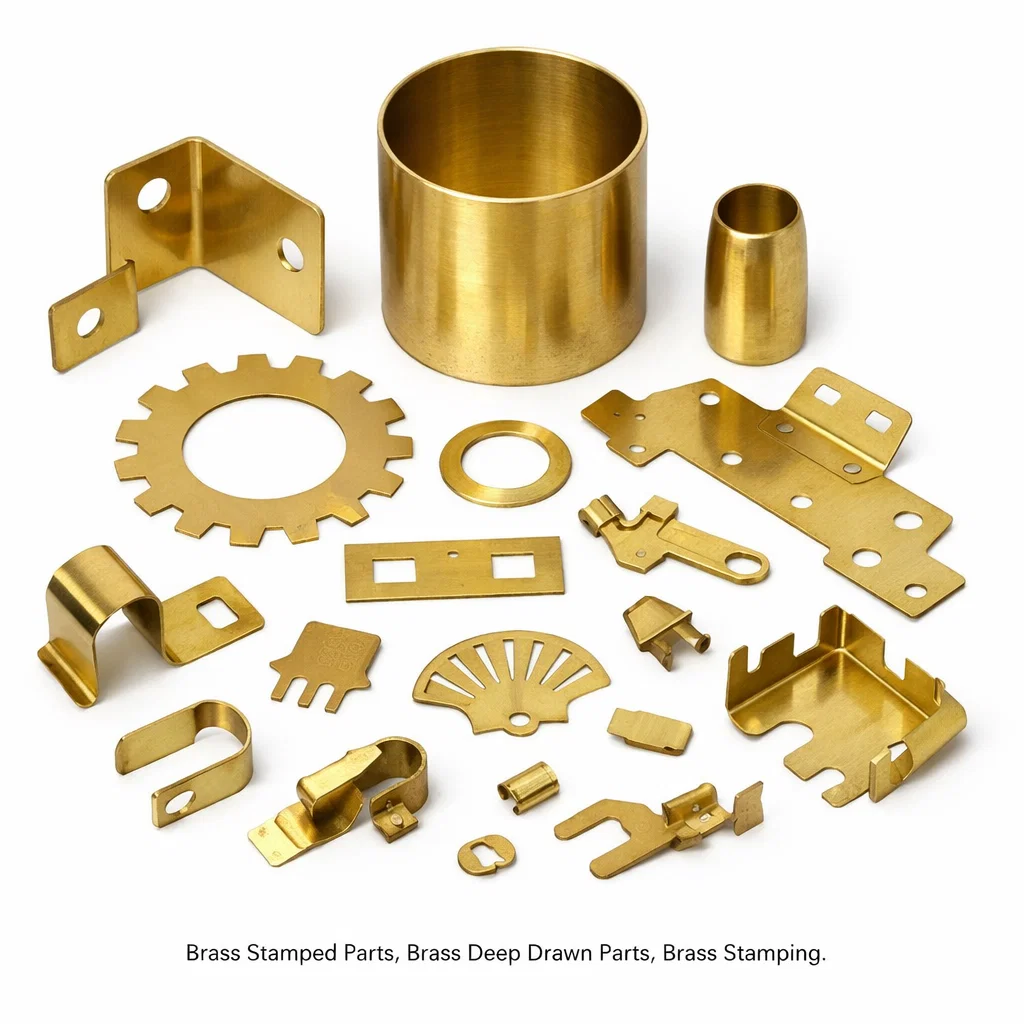
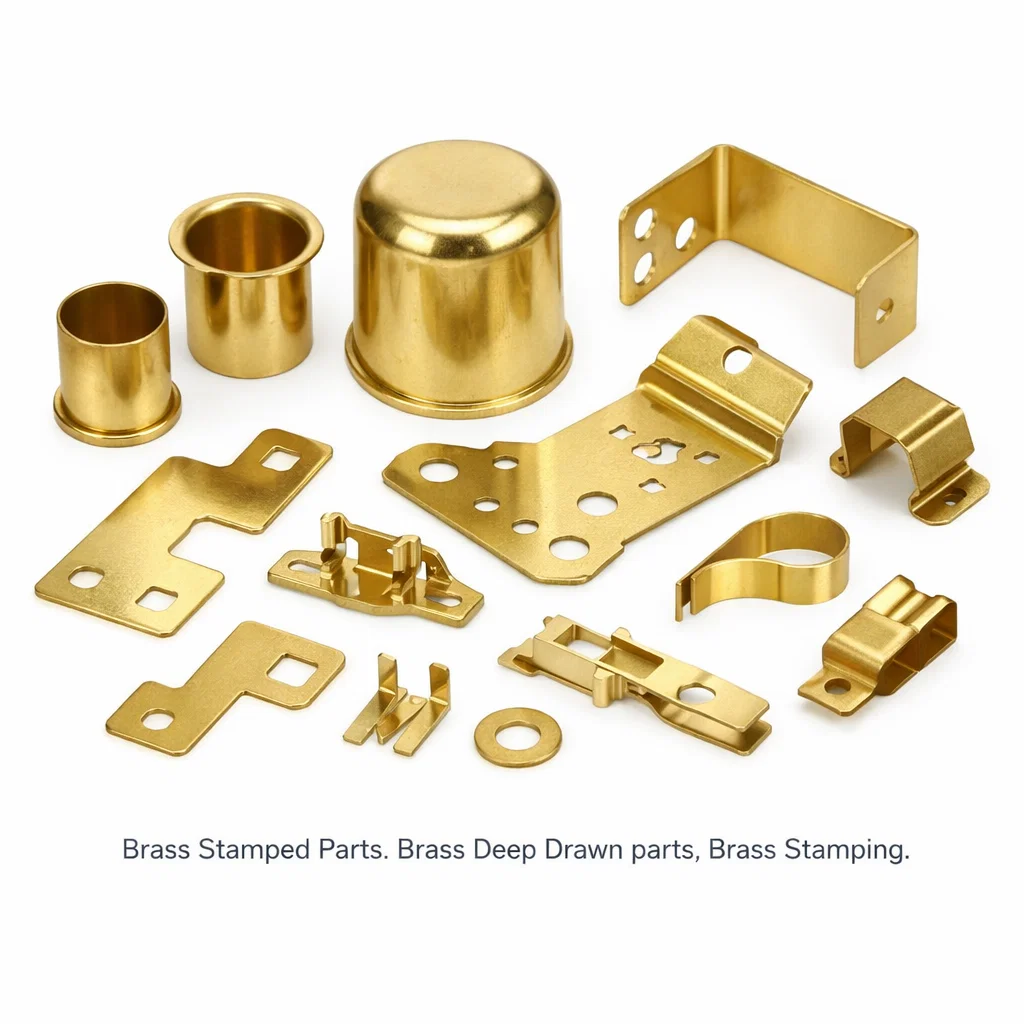
Price: US$ 17.90/kilogram CIF US port
Overview (Manufacturing Expertise & Global Supply)
We are one of the leading manufacturers and exporters of Brass Stamping, Brass Stamped Parts, and Brass Stamped Components from India. We have been supplying precision Brass stamped and pressed components to the world market for many decades, serving OEMs, Tier-1 suppliers, and distributors across the USA, Europe, Canada, the UK, and Australia. Our strength lies in combining deep metallurgical knowledge, advanced stamping technology, and disciplined quality systems to deliver repeatable, high-performance components. With over three decades of global exposure, we understand international drawings, GD&T practices, PPAP expectations, and application-critical tolerances. Our engineering team works closely with customers to optimize designs for manufacturability, cost, and performance—without compromising compliance. Every project is backed by documented processes, traceability, and responsive communication, ensuring trust, reliability, and long-term partnerships. E-E-A-T is embedded through experience, engineering authority, audited systems, and transparent documentation.
Updated: 2025
Brass Stamping
Brass Stamping is a cold-working process where Brass sheets or strips are formed using precision dies under controlled press forces. We specialize in progressive, compound, and single-stroke stamping for tight tolerances and high repeatability. Our process control ensures uniform grain flow, minimal burrs, and consistent mechanical properties. Tooling is designed with wear-resistant steels and optimized clearances to extend die life. We routinely stamp thin to medium gauges while maintaining flatness and edge quality critical for electrical and mechanical assemblies. Applications demand dimensional stability, conductivity, and corrosion resistance—areas where Brass excels. Our stamping lines are configured for scalable volumes, from prototypes to mass production.
Brass Stamped Parts
Brass Stamped Parts are finished or semi-finished components produced for direct assembly or secondary operations like tapping and plating. We deliver parts with controlled surface finish, deburring, and optional heat treatment where required. Each part is validated against customer drawings, functional requirements, and international standards. Our parts are widely used in electrical terminals, connectors, grounding hardware, automotive brackets, and appliance components. Consistency across batches is ensured through SPC, in-process inspection, and calibrated gauges.
Updated: 2025
Brass Stamped Components
Brass Stamped Components often represent complex geometries requiring multi-stage forming and tight positional accuracy. We support coining, embossing, lancing, and piercing within the same tool set to reduce handling and lead time. Components are engineered to meet electrical conductivity, spring properties, and fatigue resistance. We collaborate on tolerance stack-ups and assembly fitment to avoid downstream issues.
Updated: 2025
Brass Pressed Components
Brass Pressed Components are produced using controlled press loads to achieve deeper forms and structural integrity. This process is ideal for cups, shells, covers, and reinforced profiles. Material flow is simulated during tooling design to prevent thinning and cracking. Pressed components are supplied with optional annealing and plating to meet functional needs.
Updated: 2025
Brass Pressed Parts
Brass Pressed Parts emphasize robustness and dimensional repeatability across production runs. We manage springback through die compensation and process tuning. These parts are commonly used in switchgear, lighting fixtures, plumbing sub-assemblies, and industrial enclosures.
Updated: 2025
Brass Sheet Metal Parts
Brass Sheet Metal Parts leverage the alloy’s formability and corrosion resistance. We process coils and sheets with strict thickness control and surface integrity. Parts are supplied flat or formed, ready for assembly, welding, or fastening.
Updated: 2025
Brass Cold Stamping Work
Brass Cold Stamping Work avoids thermal distortion, preserving material properties and dimensional accuracy. Cold work enhances surface finish and strength through work hardening. Our cold stamping capability supports precision electrical and electronic applications where tolerance and conductivity are critical.
Material Grades & International Equivalents
| Region | Standard | Common Grades |
|---|---|---|
| USA | ASTM / UNS | C26000 (Cartridge Brass), C26800, C27000, C28000, C35300 |
| Europe | EN / DIN | CW505L, CW508L, CW510L |
| UK | BS | CZ106, CZ107 |
| Japan | JIS | C2600, C2680 |
| China | GB | H62, H65 |
| India | IS | IS 513 Brass Sheets |
Material Properties (Typical)
| Property | Range |
|---|---|
| Tensile Strength | 300–500 MPa |
| Electrical Conductivity | 20–28% IACS |
| Hardness | HV 80–150 |
| Thickness Range | 0.2 mm – 6.0 mm |
Typical Brass Stamping and sheet metal and pressed parts commonly manufactured:
Electrical & Electronics Components
- Terminal connectors & lugs
- Brass terminals and Brass Cable Lugs
- Brass stamped Connectors and Brass Stamped lugs
- Brass washers (flat, spring, lock)
- Electrical contact strips
- Switch plates & covers
- Brass Fuse clips & holders
- Brass Battery terminals
- Brass and Copper Grounding straps
- Bus bars
- Brass Earth tags for cable glands
- Cable glands & accessories
Hardware & Fasteners
- Brass eyelets & grommets
- Rivets & rivet washers
- Brackets & mounting plates
- Hinge leaves
- Name plates & tags
- Shims (precision thickness)
- Spacers
- Clips & clamps
Plumbing & Sanitary
- Escutcheon plates
- Drain covers
- Brass pipe clamps, Brass Pipe clips
- Shower flanges
- Tap/faucet back plates
- Valve tags
- Pipe clips & saddles
Automotive Components
- Radiator fins & tanks
- Fuel system components
- Dashboard trim pieces
- Horn diaphragms
- Bearing cages
- Oil pump gears (stamped)
Decorative & Architectural
- Door hardware backplates
- Cabinet hardware
- Decorative rosettes
- Push plates
- Kickplates
- Corner guards
Industrial Components
- Filter screens & perforated sheets
- Packing glands
- Thrust washers
- Retaining rings
- Gaskets & sealing washers
- Instrument parts
- Small gears (stamped)
Precision Stampings
- Watch/clock components
- Instrumentation dials
- Springs (flat, wave)
- Diaphragms
- Belleville washers
- Retainer clips
Common Brass Alloys for Pressing:
- C26000 (Cartridge Brass – 70/30)
- C27000 (Yellow Brass)
- C28000 (Muntz Metal)
- C36000 (Free Cutting Brass)
Manufacturing Processes & Machinery
We use high-precision mechanical and hydraulic presses (10–160 tons), servo feeders, decoilers, straighteners, and in-house tool rooms. Processes include blanking, piercing, bending, coining, embossing, progressive stamping, and secondary machining. Quality is supported by vision inspection, profile projectors, micrometers, and CMMs.
Typical Parts Produced
Electrical terminals, grounding clips, connectors, spring contacts, shielding parts, brackets, washers, clips, busbar laminations, switchgear components, and appliance sub-assemblies.
Line Drawing (Reference)
| Dimension | Typical Range |
|---|---|
| Length | 10–250 mm |
| Width | 5–150 mm |
| Thickness | 0.2–6.0 mm |
| Hole Diameter | Ø1.0–Ø20 mm |
| Flatness | ≤ 0.1 mm / 100 mm |
Plating & Surface Finish
Nickel, Tin, Silver, Gold flash, Clear/Yellow Passivation, Electro-polishing. RoHS & REACH compliant finishes available.
Industries Served
Electrical & Electronics, EV & Energy, Automotive, HVAC, Industrial Equipment, Telecommunications, Lighting, Plumbing, Renewable Energy.
Tolerances, Turnaround & Performance
Typical stamping tolerances: ±0.05 mm to ±0.10 mm depending on geometry. Turnaround time: 4–6 weeks including tooling (faster for repeat parts). Performance metrics include dimensional Cp/Cpk ≥ 1.67, on-time delivery > 95%, and batch traceability.
Why Choose Us
Customers choose us for faster turnaround, engineering-led customization, responsive communication, and three decades of global manufacturing experience. We offer flexible production planning, drawing optimization suggestions, customized packaging with customer labels/logos, and export-ready documentation for the USA and EU markets.
Packaging & Shipping
Anti-tarnish packaging, moisture-controlled cartons, barcoding, palletization, and export-grade packing. Shipments via air or sea with complete commercial and compliance documents.
Customer Testimonials
Michael R., Ohio, USA: “Exceptional quality and consistency. Their engineering feedback improved our stamping yield and reduced costs.”
David L., Ontario, Canada: “Reliable partner with strong documentation and fast turnaround. Communication is clear and professional.”
Typical Q&A (Buyer-Focused)
Do you supply to the USA? Yes, with ASTM-compliant materials and export documentation.
Can you customize tooling? Absolutely, in-house tool design and validation.
What volumes do you support? Prototypes to high-volume production.
Are finishes RoHS compliant? Yes.
Can you hold tight tolerances? ±0.05 mm on suitable geometries.
Do you assist with DFM? Yes, early engineering support.
What is lead time? Typically 4–6 weeks.
Do you offer PPAP? On request.
Can you pack with our branding? Yes.
Which Brass grades are common? C26000, CW508L, H62, JIS C2680.
Do you support repeat orders? With stable tooling and SPC.
Can you plate in-house? Approved partners with certifications.
Do you export globally? USA, EU, UK, Canada, Australia.
Is traceability maintained? Yes, heat and batch level.
Do you handle mixed processes? Stamping plus secondary ops.
Glossary of Terms – Brass Stamping & Pressed Parts
Manufacturing Processes
Blanking – Cutting operation that shears a flat shape (blank) from sheet metal stock; the blank becomes the final part while the remaining material is scrap.
Piercing – Punching holes or cutouts in sheet metal; the pierced material is scrap while the remaining sheet is the workpiece.
Progressive Die Stamping – Multi-station process where the brass strip advances through sequential operations at each press stroke, creating complex parts.
Transfer Stamping – Parts are mechanically moved between separate stamping stations, allowing for more complex operations than progressive dies.
Compound Die – Performs multiple operations (blanking, piercing) in a single press stroke at one station.
Forming – Bending, stretching, or shaping metal without removing material; includes operations like flanging, curling, embossing.
Deep Drawing – Forming process that transforms flat sheet into hollow, cup-shaped parts by pulling metal into a die cavity.
Coining – High-pressure stamping that creates precise details, sharp corners, and smooth surfaces by compressing metal between dies.
Embossing – Creating raised or recessed designs on sheet metal surface for decoration or functional features.
Lancing – Cutting and bending operation that creates tabs or vents while leaving them attached to the parent metal.
Notching – Cutting notches or indentations at the edge of sheet metal, typically for alignment or assembly purposes.
Shearing – Cutting operation using opposing blades to separate metal along a straight line.
Curling – Rolling the edge of sheet metal to create a rounded, reinforced rim.
Beading – Creating raised ribs or indentations for strengthening or decorative purposes.
Hemming – Folding sheet metal edge over itself to eliminate sharp edges and add stiffness.
Tooling & Equipment
Punch – Upper die component that applies force to cut or form the brass sheet.
Die – Lower component with cavity or profile that shapes the metal when punch descends.
Stripper Plate – Plate that holds material flat and strips it from the punch after each stroke.
Pilot Pins – Precision pins that locate the strip accurately in progressive dies using previously pierced holes.
Die Clearance – Gap between punch and die; typically 5-10% of material thickness for brass.
Press Tonnage – Force capacity of stamping press, measured in tons; must exceed shearing force requirements.
Bolster Plate – Thick steel plate on press bed that supports the lower die.
Ram – Reciprocating component of press that carries the upper die/punch.
Stroke Length – Maximum vertical travel distance of the press ram.
Shut Height – Closed dimension from top of bolster plate to bottom of slide with stroke down.
Cam Unit – Mechanism for creating lateral or angular motions in progressive dies.
Spring Return – Springs that return die components to starting position after each stroke.
Nest – Cavity or profile in die that locates and supports the workpiece during forming.
Pressure Pad – Spring-loaded plate that holds material during drawing or forming operations.
Materials & Properties
Temper (Hardness) – Degree of hardness/softness in brass sheet; ranges from soft (O) to full hard (H08).
Grain Direction – Orientation of metal crystals from rolling; affects formability and bending characteristics.
Annealing – Heat treatment to soften brass, improving formability and reducing spring-back.
Spring-Back – Tendency of formed brass to partially return to original shape after forming pressure is released.
Ductility – Ability of brass to deform without fracturing; essential for deep drawing and complex forming.
Yield Strength – Stress level at which brass begins permanent deformation.
Ultimate Tensile Strength (UTS) – Maximum stress brass can withstand before fracturing.
Elongation – Percentage of stretch before fracture; higher values indicate better formability.
Dezincification – Corrosion process where zinc leaches from brass alloys in certain environments.
Season Cracking – Stress corrosion cracking in brass exposed to ammonia or amines while under stress.
Quality & Defects
Burr – Rough edge or thin projection of metal remaining after cutting/shearing operations.
Rollover – Rounded edge at sheared surface caused by metal deformation during cutting.
Fractured Edge – Rough, broken appearance on sheared edge where metal tears rather than cuts cleanly.
Galling – Metal transfer and surface damage caused by friction between die and brass during stamping.
Wrinkling – Formation of wrinkles or buckles in deep drawn parts due to compressive stresses.
Tearing – Fracture or crack in formed part caused by excessive stretching or poor material flow.
Orange Peel – Rough surface texture appearing on formed brass with large grain structure.
Springback – Elastic recovery causing formed part to open up slightly after forming pressure is removed.
Camber – Longitudinal curvature along the length of brass strip or sheet.
Coil Break – Visible lines across width of brass sheet from coiling/uncoiling stresses.
Die Lines – Scratches or marks on finished part caused by scoring or wear in die surfaces.
Pillowing – Bulging between embossed features in coined or embossed parts.
Slug Pull – Pierced slugs sticking in punch and creating defects; requires proper die clearance.
Oil Canning – Elastic buckling in flat areas causing popping in/out when pressed.
Measurements & Specifications
Gauge – Traditional thickness measurement for sheet metal; lower numbers = thicker material.
Thickness Tolerance – Acceptable variation in brass sheet thickness per standards (typically ±0.05mm to ±0.10mm).
Flatness – Maximum deviation from perfectly flat plane across sheet surface.
Bend Radius – Minimum inside radius that can be formed without cracking; typically 1-2× material thickness for brass.
Bend Allowance – Additional material length required to achieve specified bend dimensions.
K-Factor – Ratio used to calculate neutral axis position in bent parts for accurate blank sizing.
Dimensional Tolerance – Acceptable variation in finished part dimensions; typically ±0.1mm to ±0.2mm for stamped brass.
Position Tolerance – Allowable variation in location of features (holes, slots) relative to datums.
Perpendicularity – Squareness requirement for bent flanges or formed features.
Concentricity – Requirement that features (like holes) share common centerline.
Production Terms
Coil Stock – Brass supplied in continuous coiled strips for feeding into progressive dies.
Sheet Stock – Flat brass sheets for individual stamping operations.
Nesting – Arranging multiple parts on sheet to minimize scrap material.
Scrap Rate – Percentage of material wasted in stamping process; affected by part geometry and nesting.
Cycle Time – Time required to complete one stamping cycle, measured in strokes per minute (SPM).
Production Run – Quantity of parts manufactured in continuous operation without die changes.
Setup Time – Time required to install dies, adjust press, and prepare for production.
First Article Inspection (FAI) – Dimensional verification of initial parts before full production run.
Run-at-Size – Running dies at final dimensions without trial adjustments.
Die Maintenance – Regular sharpening, cleaning, and adjustment to maintain part quality.
Strip Layout – Design showing part orientation and progression through multi-stage dies.
Carrier/Skeleton – Remaining strip material after parts are blanked; holds strip together through progressive operations.
Lead-In – Starting section of progressive die strip before first operational station.
Pilot Hole – Precision holes for locating strip in subsequent die stations.
Standards & Specifications
ASTM B36 – Standard specification for brass plate, sheet, strip, and rolled bar.
ASTM B134 – Standard specification for brass wire.
ISO 9001 – Quality management system standard for manufacturing processes.
Dimensional Drawing – Engineering drawing specifying all critical dimensions, tolerances, and material specifications.
GD&T (Geometric Dimensioning & Tolerancing) – System for defining part geometry and dimensional tolerances.
Material Certification – Documentation verifying brass alloy composition and mechanical properties.
First Article Report – Documentation proving initial production parts meet all specifications.
PPAP (Production Part Approval Process) – Automotive industry standard for new part approval.
Related Parts/terms:
Brass Sheet Metal Stamping, Precision Brass Pressings, Electrical Brass Terminals, Custom Brass Stamped Parts, Brass terminals, Brass earth tags, Brass pipe clamps,Progressive Die Brass Components, Exporter of Brass Stampings from India.
Call to Action
Ready to source reliable Brass Stamping and Brass Stamped Components? Request a quote, email us for a technical brochure, or contact us via phone/WhatsApp to discuss your drawing and requirements today
Brass Stamping by Material Grade
C26000 (Cartridge Brass) Stamping and Stamped Brass Components
Explore 70/30 cartridge brass composition, tempers, stamping processes, tolerances and surface finishes. Price: US$17.90/kg.
Additional brass stamping grades
| Product grade | Typical component enquiries |
|---|---|
| C27000 Grade Brass, CW508L (CuZn37) Brass Stamping and Stamped Parts | Terminal plates, connector tabs, washers and formed brackets |
| CuZn40 Brass (C28000 Muntz Metal) Sheet Metal Parts and Stamped Components | Muntz metal plates, mounting straps and stamped hardware |
| C27200–C27400 Yellow Brass 63/37 Stamping and Sheet Metal Parts | Yellow brass shims, pierced plates, clips and sheet metal components |